Imagine you’re in wheelchair♿
There are 2 versions of Bangkok — one where you go to work as usual, the other where you can’t even leave home.
1️⃣Bangkok 1 — No UD🚫:
No ramps, blocked sidewalks, broken tactile paving, BTS without elevators, steps, narrow doors.
→ Can’t work → No income → Country stagnates↙️
2️⃣Bangkok 2 — With UD♿:
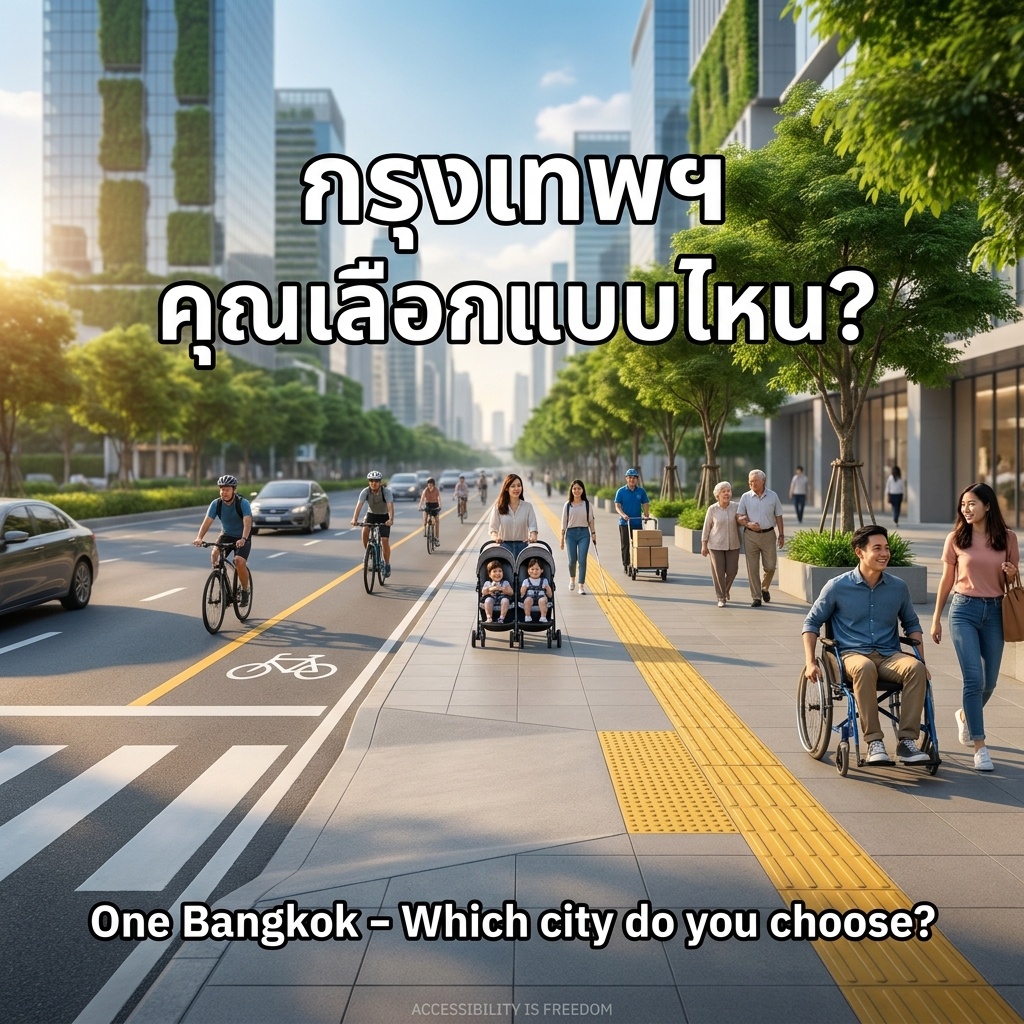
Ramps everywhere, wide sidewalks with curb cuts, BTS stations with elevators and level boarding, ramp access, automatic doors, accessible restrooms.
→ Can work → Has income → Pays taxes → Country develops↗️
Universal Design = designing for “everyone” — no matter age or ability:
1️⃣ Equitable Use — same for all (automatic doors)
2️⃣ Low Physical Effort — easy to use (lever faucets)
3️⃣ Perceptible Information — everyone understands (Braille in elevators)
4️⃣ Accessible Space — room for all (wide doors)
Many think Universal Design is “for people with disabilities” — wrong❌.
Curb cuts were designed for wheelchair users, yet parents with strollers, delivery workers, tourists, the elderly use them. The “curb cut effect”: designed for one group, benefits everyone☑️
Thai society is aging fast: 60+ from 14% (2016) to 25.2% (2030). 2024: births fell below deaths for the first time since 1949. More elderly, fewer workers — accessibility is a necessity, not a luxury.
Thai law: Persons with Disabilities Empowerment Act B.E. 2550, Sec. 15 (พรบ. คนพิการ 2550 ม.15) — indirect discrimination is illegal. Ministerial Regulation on Basic Facilities (กฏกระทรวงกำหนดสิ่งอำนวยความสะดวกพื้นฐานฯ) — no ramps, accessible parking, accessible restrooms = illegal.
One world, one Bangkok. Let’s make it a city for everyone.
🤸 🧑🦽🧑🦼🧑🦯🏃🚴🚼♿🧑🧑🧒
Don’t forget to tell a friend, or share this article to spread the word💪
Sources: WHO Disability Fact Sheet (2023), Persons with Disabilities Empowerment Act B.E. 2550 (พ.ร.บ. ส่งเสริมและพัฒนาคุณภาพชีวิตคนพิการ พ.ศ. 2550), Center for Universal Design, NC State University (1997)