
Friends, when people talk about New York, many think of skyscrapers, yellow cabs, and bright lights. But for me, the first thing I think is, “Where can I go?” Because equal access to public transit is a big deal for any city.
Let’s look at the facts. The best part is that **every single MTA bus is 100% wheelchair-accessible**. Yes, every bus has a ramp or lift for wheelchair users, following the Americans with Disabilities Act (ADA), which has been in effect since 1990. So if you ride the bus in New York, you can go anywhere without barriers.
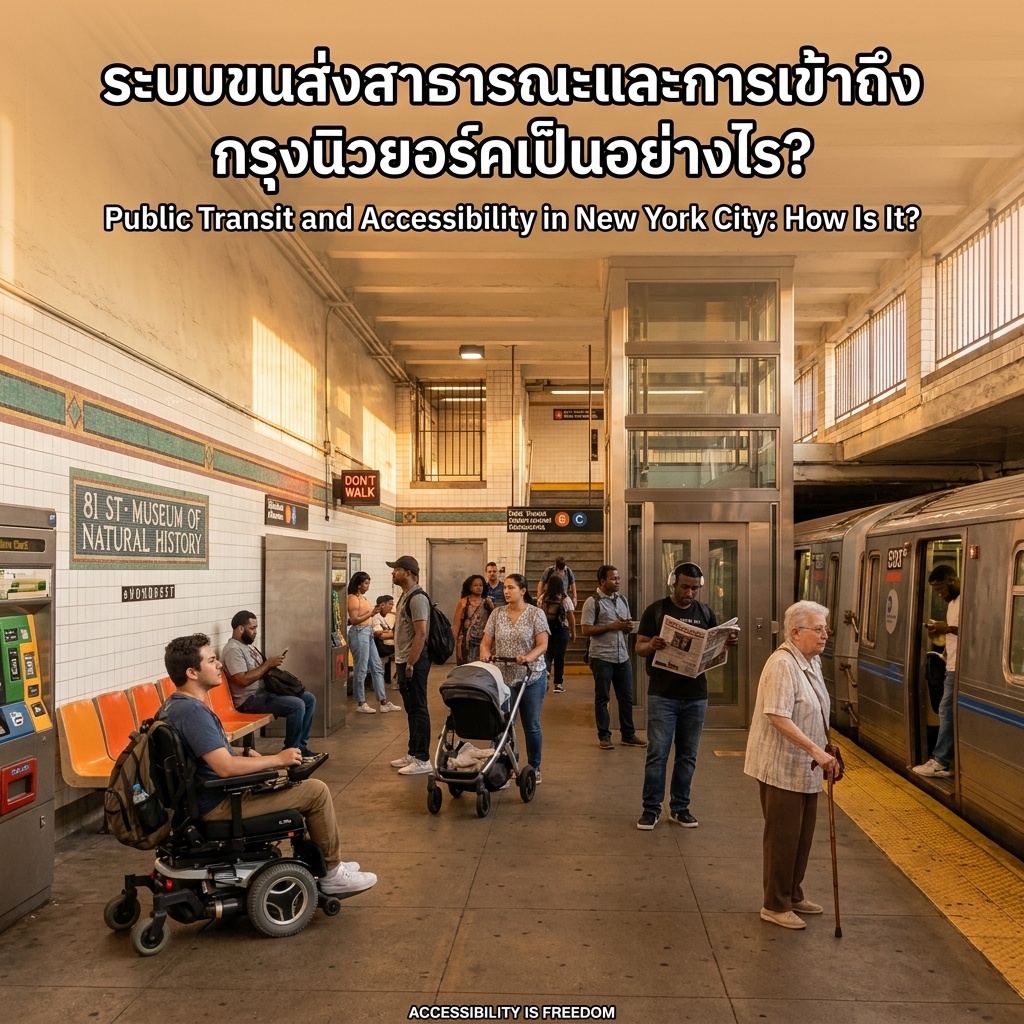
But the problem is **the subway**. The New York subway system was built in 1904, long before the ADA existed. So most stations weren’t designed with elevators. Right now, only about **32% of all stations have elevators**. That means if you’re a wheelchair user, you can only access less than one-third of subway stations. That’s a huge gap.
But there’s good news. Governor Kathy Hochul announced in 2025 that the MTA completed 10 station accessibility projects. And there’s a massive **$68 billion capital plan for 2025–2029** that aims to make **95% of all stations accessible by 2028**. Specifically, at least 66 stations across all five boroughs are being upgraded.
There’s also a supplemental service called **Access-A-Ride**, a paratransit service for people with disabilities who can’t use the bus or subway. It’s a shared-ride service, and you need to apply for eligibility first.
In short: buses are excellent, but the subway is a big project still waiting to be fixed. The plan is in place and work is happening. I hope soon everyone will be able to travel equally.
Sources: MTA, Governor Hochul press release