
Vietnam is building a transport system that’s accessible from the start — and that’s something Thailand should be watching.
Vietnam covers 331,345 km² with a population of 102.3 million, a density of 309 people/km². Thailand, by contrast, is 513,000 km² with 66 million people, density 129/km². Vietnam has 1.5 times more people in 1.5 times less land — public transport isn’t optional, it’s essential.
Vietnam passed its Law on Persons with Disabilities in 2010 and a Barrier-Free Access Code in 2002. About 7.8% of the population — roughly 6 million people — have disabilities, and 75% live in rural areas. The law requires public spaces and transport to be accessible, but enforcement in older systems is slow.
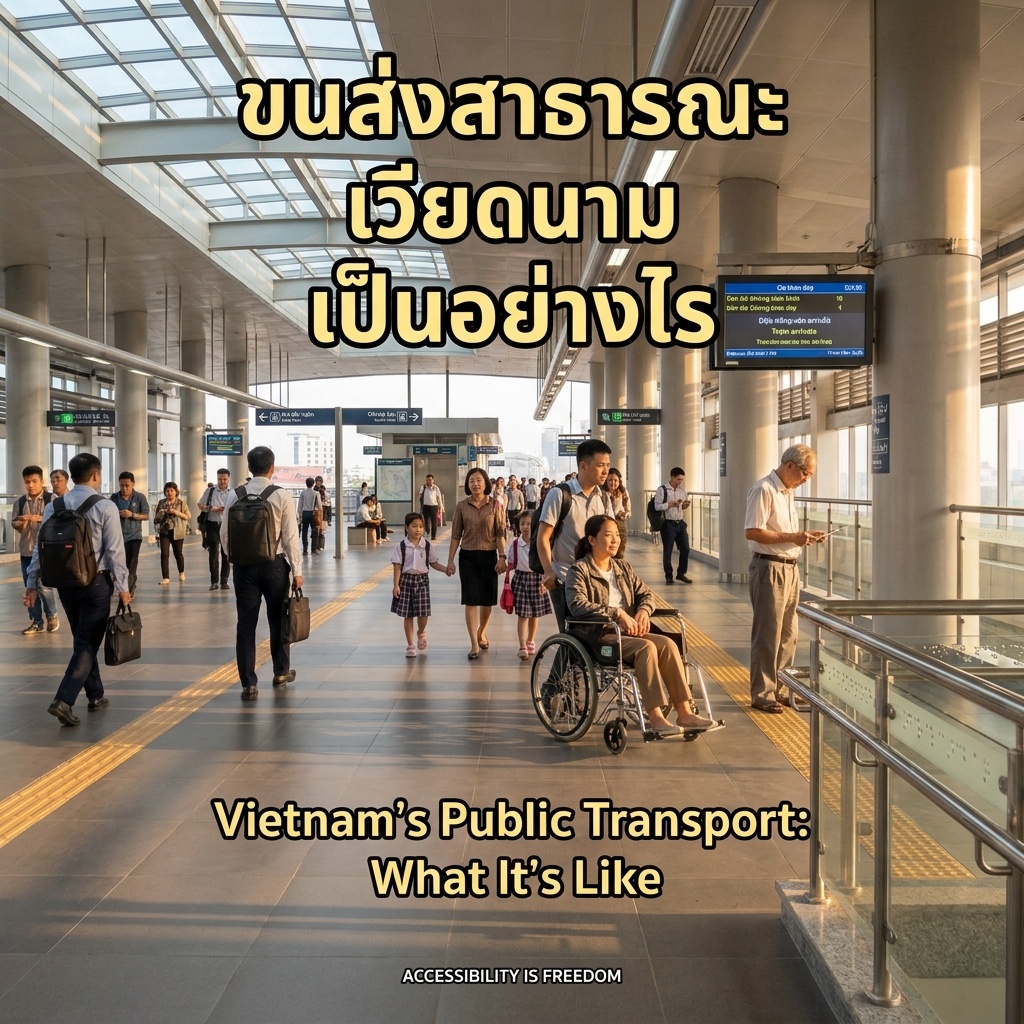
The railway system is 140 years old, covering 3,159 km, carrying just 27,000 passengers a day. Almost no accommodations for wheelchair users. But the game-changer is the metro. Hanoi’s Line 2A (13.1 km, 12 stations, opened 2021) and Ho Chi Minh City’s Line 1 (19.7 km, 14 stations, opened December 2024) were designed for accessibility from the start — no retrofitting needed.
Hanoi’s bus system has 123 routes, carrying 453.6 million passengers a year. New electric buses are accessible, but older ones still aren’t — similar to Thailand’s own transition.
What Vietnam is doing is laying the foundation from the ground up. The laws exist, new infrastructure is built with accessibility in mind. There are still huge challenges, but the direction is right. Let’s cheer on our Vietnamese friends.
Sources: ASEAN Disability Forum, ESCAP, Wikipedia