

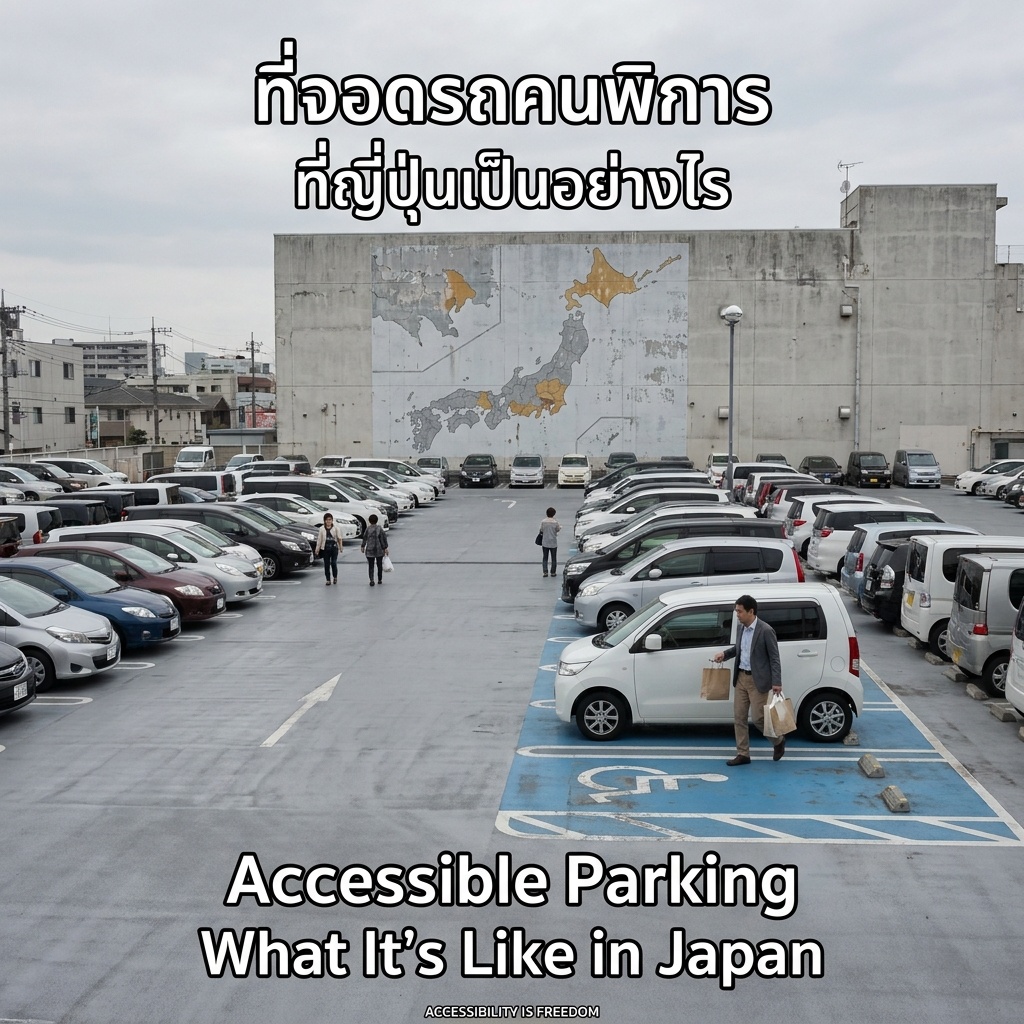
Japan has two separate disabled parking systems. On-street parking, run by police and the Public Safety Commission, has real permits and fines — the law has teeth.
Off-street parking — malls, hospitals — uses the “Omoiyari” (compassion) system, run by local governments. No penalties. It relies entirely on goodwill.
44 of 47 prefectures (93%) use Omoiyari. Three permit tiers: blue (wheelchair), green (disabilities/seniors), orange (pregnancy/temporary injuries). Permits are increasingly recognized across prefecture lines.
The gap: Tokyo, Hokkaido, and Aichi haven’t adopted it. Tokyo — Japan’s largest city — has no compassion parking on private property. Disabled people at Tokyo malls or hospitals rely solely on kindness.
Abuse is a serious problem. Complaints flood the Ministry of Internal Affairs about non-disabled drivers taking disabled spaces. MLIT acknowledges this is an issue worldwide.
MLIT launched guidelines and campaigns — posters reading “Someone really needs this space” — banking on omoiyari: trusting people to do the right thing from the heart, without threat of penalty.
Reaching 44 prefectures is real progress. But the three holdouts and the lack of penalties for off-street parking are the next chapter to address.
Sources: MLIT Guidelines on Disabled Parking, Japan Society of Civil Engineers (JSCE), Ministry of Internal Affairs