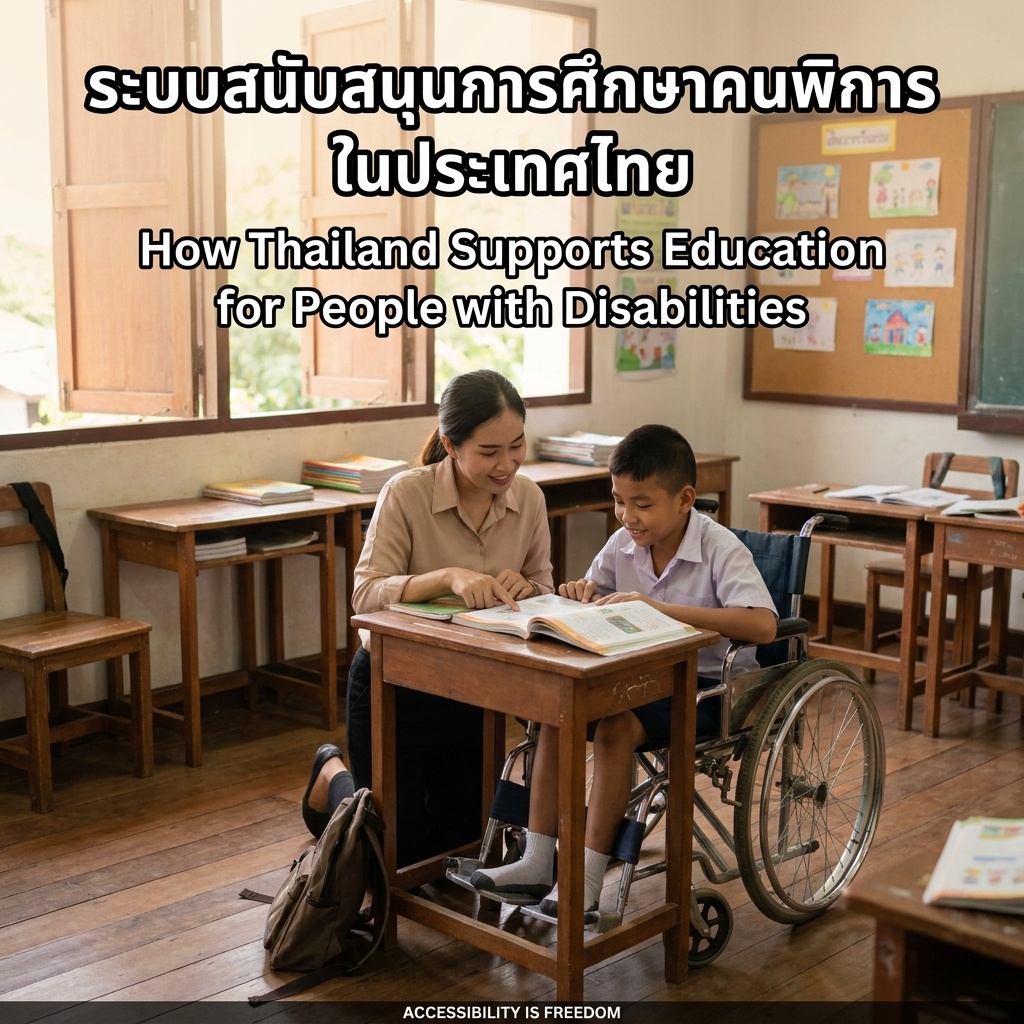
After covering the overall rights and welfare picture, today let’s dive deep into education — because if we have a good, accessible education system, life opportunities for people with disabilities open up enormously.
The core law is the Persons with Disabilities Education Act 2008 (amended 2013). It covers from birth through lifelong learning and supports 9 disability types: hearing, visual, physical, intellectual, autism, learning disabilities, and more.
Every person with a disability has the right to free education through a bachelor’s degree — tuition, equipment, and learning materials included. The Special Education Development Fund (SEDF) supports projects, assistive technology, and teacher training.
The infrastructure is solid: 13 special education centers across every region, specialized schools for each disability type, and importantly, over 20,000 mainstream schools with inclusive education programs. Every student must have an Individualized Education Plan (IEP) to tailor teaching to their needs.
The pathway is clear: register for a disability ID card, assess educational needs, choose a school, create an IEP, and activate support.
The system has a good structure and works. Of course, there are gaps to close—like helping parents access information and training teachers better for inclusive classrooms. But at least we have a strong foundation to build on.
Sources: MOE, OBEC, SEDF, DEP, TDRI, IAFOR