
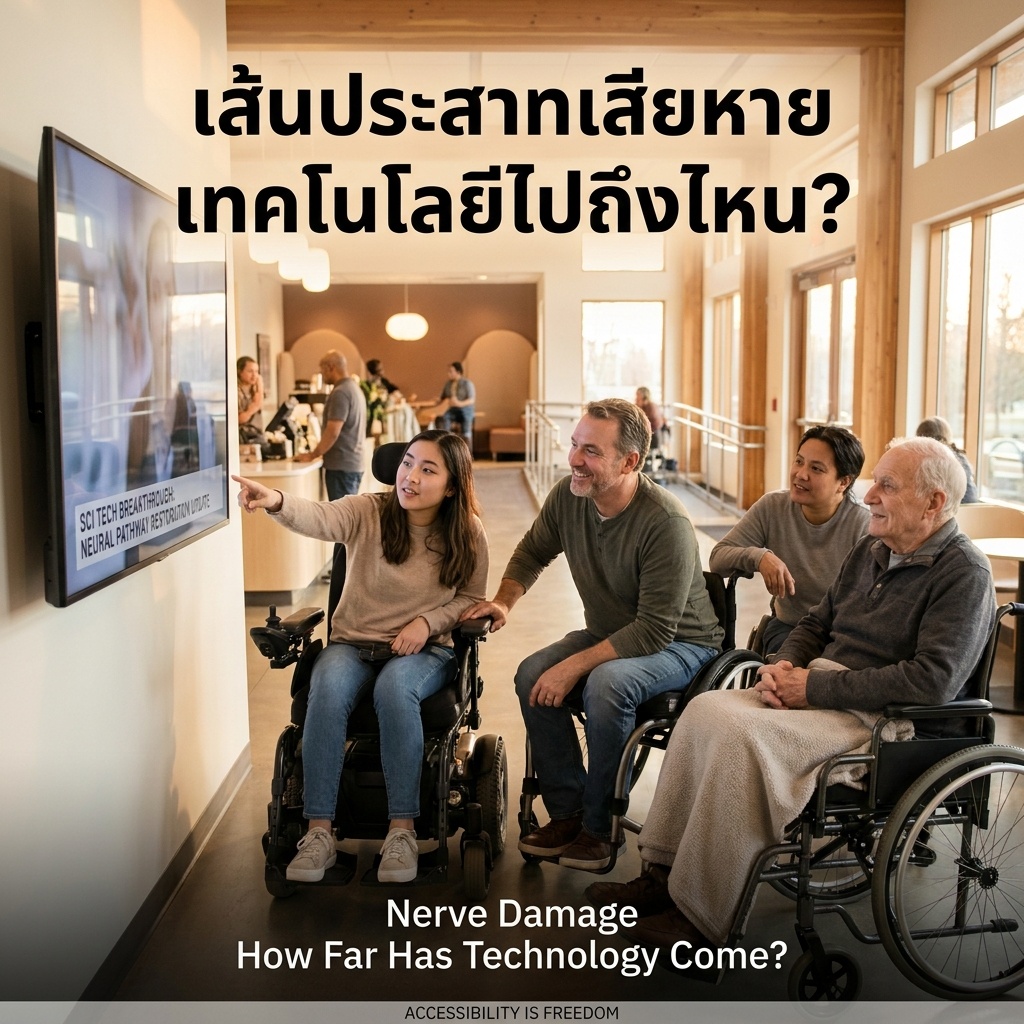
Over the past 10 years (2014-2026), spinal cord injury treatment technology has advanced more than ever before. While there’s still no cure, there are 6 major technologies worth watching:
1. Epidural Stimulation
– How it works: Implantable electrical stimulator placed on spinal cord below injury, sends electrical signals mimicking brain commands
– Key study: 2018 (UCLA, Louisville) — 4 people with complete injuries stood and walked again after 6-12 months with device
– Current status: ONWARD Medical received CE Mark in Europe 2022 (ARCHIMES study), FDA Phase 3 trials underway in US
– Outcomes: 80% of participants could stand, 60% walked with assistance, 40% improved bladder control
– Limitations: Requires surgical implant, intensive physical therapy required (3-5 times/week), doesn’t restore 100% function
– Timeline: 2026-2027 treatment centers expanding in Europe, 2028-2029 possible FDA approval
2. BCI + Spinal Stimulation (Brain-Computer Interface)
– How it works: Brain implant decodes movement intention, sends signals to spinal stimulator via AI algorithm
– Key study: 2023-2024 (EPFL/CHUV, Switzerland) — patient walked intentionally for first time via “digital bridge” between brain and spine
– Current status: Clinical trial Phase 1 (6 months)
– Outcomes: Patients could walk by thinking, step over obstacles, initiate leg movements voluntarily
– Limitations: Requires brain surgery + spine surgery, device battery lasts 2-3 years, daily charging needed, very high cost
– Timeline: 2027-2030 expanded trials, 2030-2035 possible limited approval
3. Stem Cell Therapy
– How it works: Inject stem cells at injury site to replace damaged neurons or secrete regeneration-promoting factors
– Types:
– OPC (Oligodendrocyte Progenitor Cells) — Lineage Cell (AST-OPC1)
– MSC (Mesenchymal Stem Cells) — from bone marrow, fat tissue
– Neural Stem Cells — from embryos
– iPSC (Induced Pluripotent Stem Cells) — Japan pioneer (Keio University)
– Current status: Over 40 clinical trials worldwide, mostly Phase 1/2 (safety), no FDA approval yet
– Outcomes: Small gains in sensation, improved bladder control, limited motor gains
– Limitations: Results vary widely between individuals, some studies show no difference from placebo, requires immunosuppression, high cost ($50,000-100,000 per treatment)
– Timeline: 2027-2030 possible Phase 3 results, 2030-2035 possible first approval (limited to incomplete injuries only)
4. Scaffolds (Biomaterial Guidance Structures)
– How it works: Implant biodegradable structure at injury site acts as “bridge” guiding axon regeneration across injury
– Materials: Biodegradable polymers, collagen, hydrogels
– Key study: InVivo Therapeutics received FDA Humanitarian Device Exemption (HDE) 2015 for thoracic complete injuries
– Current status: Limited clinical use (10-20 centers in US)
– Outcomes: Small motor gains in some patients, better sensory gains
– Limitations: Works best for complete injuries only, must be implanted within 72 hours of injury, limited motor recovery
– Timeline: 2026-2028 expanded use, 2028-2030 possible第二代 material improvements
5. Gene Therapy
– How it works: Use viruses to deliver genes that promote axon regeneration (e.g., delete PTEN, increase mTOR)
– Key studies: 2020-2025 (preclinical in mice) — axons regenerated across injury, partial mobility restored
– Current status: Preclinical only (animal models), not yet in human trials
– Outcomes in animals: Axons grew 1-2 cm, mice showed 40-60% improved walking
– Limitations: Cancer risk from gene editing, off-target effects, localized delivery only (not systemic), ethical concerns
– Timeline: 2028-2030 possible Phase 1 safety trials, 2035-2040 possible approval (if successful)
6. Combination Approaches
– How it works: Combine multiple methods — epidural stimulation + stem cells + scaffolds + intensive rehab + regeneration drugs
– Why: Single approaches insufficient, multi-pronged attack shows synergistic effects
– Current studies: Just starting (2025-2026) — BCI + stimulation, cells + scaffolds
– Status: Preclinical + early clinical trials
– Limitations: Very complex, extremely high cost ($200,000-500,000), interactions between methods not understood, insurance denial likely
– Timeline: 2030-2035 human trials, 2035-2040 possible limited approval
—
Timeline Summary:
– 2026-2027: Epidural stimulation centers expanding in Europe
– 2027-2030: BCI + stimulation in large-scale trials
– 2030-2035: Possible first approval (stem cells for incomplete injuries)
– 2035+: Combination approaches
Important Caveats:
1. No method restores 100% function — intensive rehabilitation always necessary
2. Beware clinics claiming “stem cell cure” without evidence (especially in Thailand, India, Mexico)
3. Most work better for incomplete injuries than complete injuries
4. Very high cost ($50,000-500,000) and mostly not covered by insurance
Who’s waiting for these technologies? give us a BIG SHOUT below! 🚀
Sources: Scout Research SCI Regeneration Report 2014-2026