

Have you ever scrolled through your feed and stumbled upon photos of Japanese streets, so clean it leaves you stunned? No trash, no oil stains, not even a trash can in sight! And yet, so many people walk there… 🤩
And have you ever wondered, how do they do it!!
Part 1: Society and Culture
The answer lies in “Osoji” (大掃除), my friend.
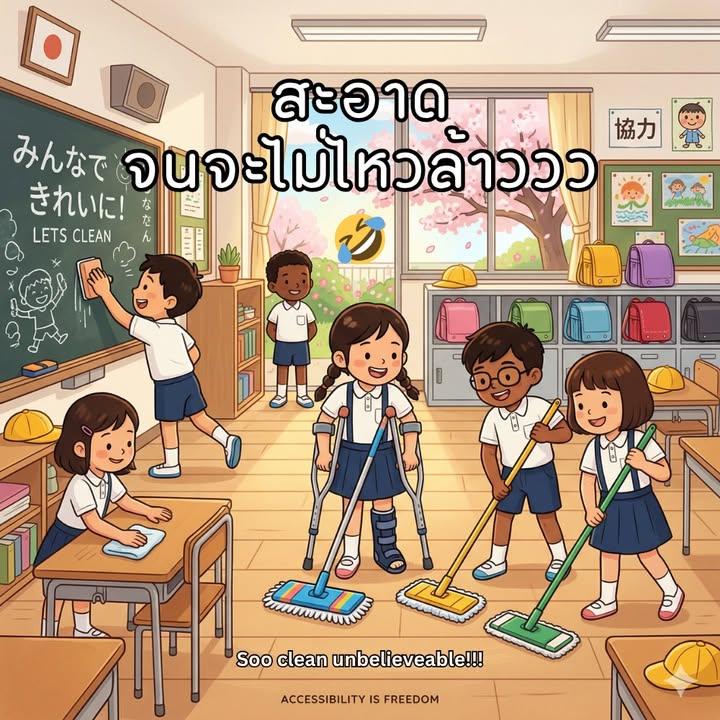
Classroom cleaning duty. 🧹
Every Japanese student has to mop floors, scrub toilets, and clean hallways every single day, starting from elementary school! It’s not just about wiping the blackboard—they actually get their hands dirty doing everything. They grow up accustomed to taking care of shared spaces. 🏫
But what’s even more impressive? Japan barely has public trash cans! 🗑️❌
After a tragic incident 31 years ago, they removed trash cans for safety—and you know what people did? They took their trash home! No littering, no mess. 💪
What helps them endure this is “Mewaku” (迷惑)—the mindset of not wanting to bother others. 😌
Littering = creating problems for society = ultimate shame.
But on the flip side, keeping things clean = shared pride.
And there’s another word: “Mottainai” (もったいない), which is like “what a waste” in our language. Cherishing things, preserving them, using them to their fullest. The Japanese have used this word since childhood, and it’s become part of their culture. 💚
Pretty amazing already, right?
But actually, Japan also has many legal systems and infrastructure that support all this…
If you enjoyed this article, don’t forget to help share it!!!
Part 1: Society and Culture
Part 2: The Legal System Keeping Watch
Part 3 Finale: Even with Challenges, I’m Happy — Thailand Has Started! Let’s Push Together a Little More…