

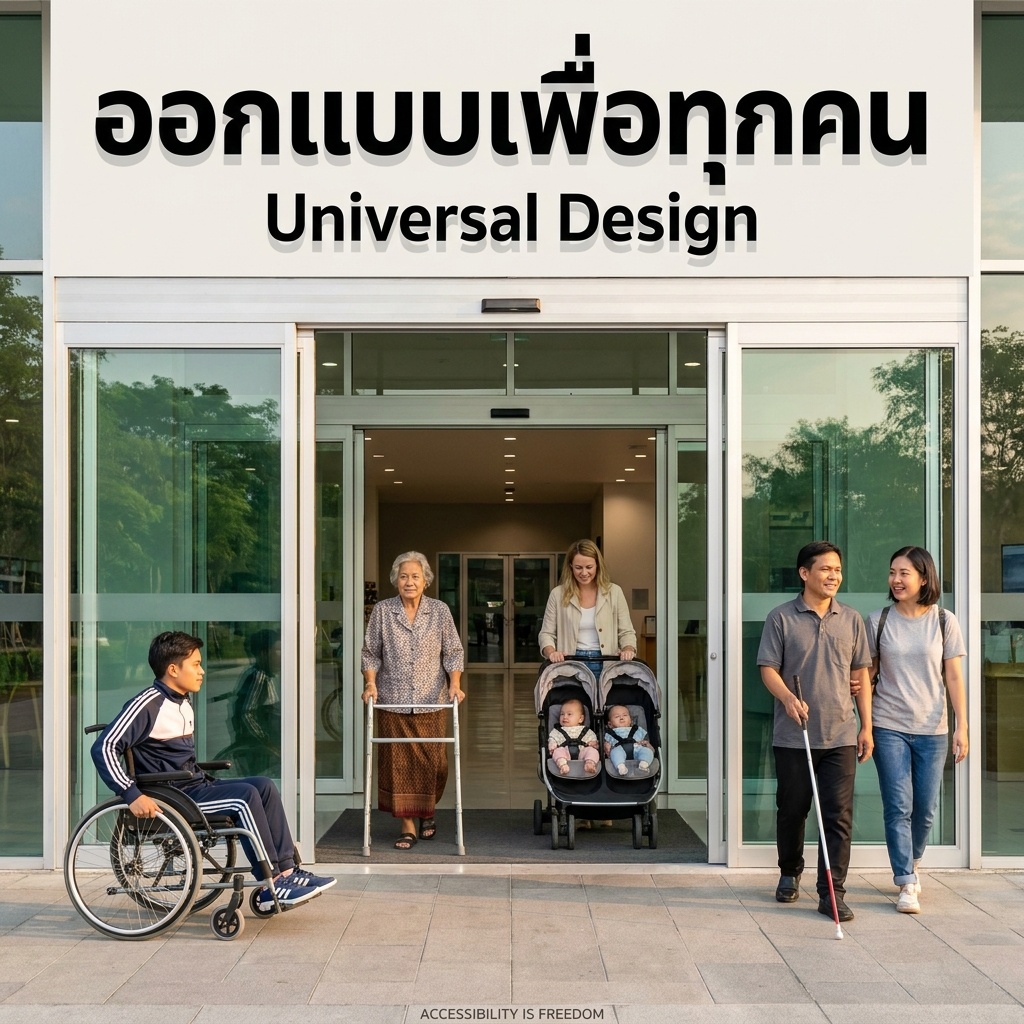
Have you ever noticed that the curb ramps we use — for strollers, suitcases, grandparents — weren’t originally designed for us? They were designed for wheelchair users.
That is Inclusive Design: designing for everyone from the start, not adding “extras” as an afterthought.
WHO data shows over 1 billion people — 16% of the world — live with disabilities. These aren’t a “special case” minority. They are fellow human beings who belong in every design from line one.
Inclusive Design isn’t complex. The principle is: “If people with disabilities can use it, everyone can use it.”
A ramp a wheelchair user can navigate — a parent with a stroller can also use.
An automatic door an elderly person can manage — someone carrying heavy bags walks through with ease.
Large, readable text designed for a person with visual impairment — everyone reads more comfortably.
This is what the UN Convention on the Rights of Persons with Disabilities, Article 9, calls for: every country must build a society fully accessible to all.
It isn’t about “helping” anyone. It’s about designing well enough for every human being from the start.
Sources: WHO, Wikipedia, UN CRPD