

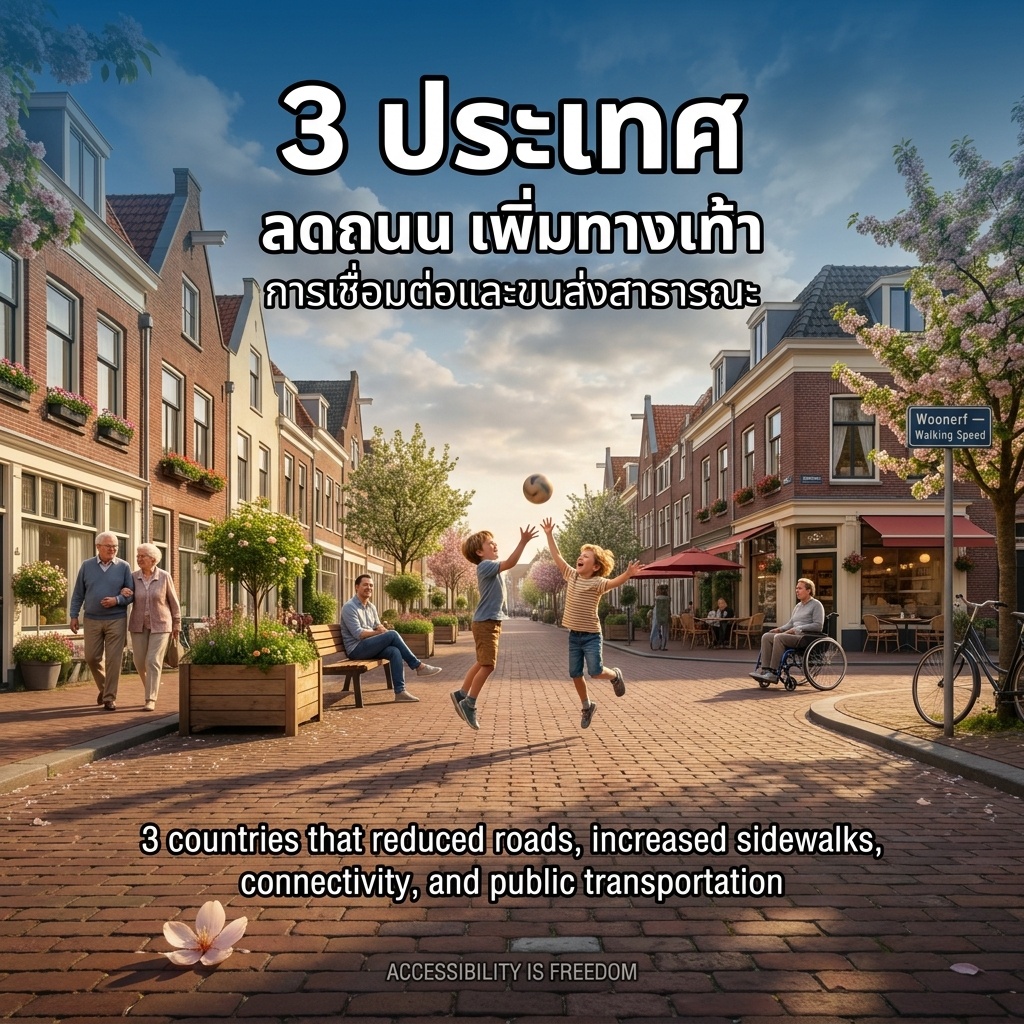
Imagine a country where over 500 children died from car accidents in a single year, then turned around to become the safest place in the world for pedestrians and cyclists. This isn’t a utopia — it’s what the Netherlands 🇳🇱 actually did.
The turning point came in the 1970s from “Stop de Kindermoord” protests, forcing the government to reverse policies and create “woonerf”—living streets prioritizing walking and cycling over cars. Today, the Netherlands has over 37,000 kilometers of bike lanes and “autoluw” low-car city centers. Accidents dropped massively, people got healthier, cities became more livable, and investment attracted businesses and tourism, turning public spaces into accessible community hearts.
Copenhagen, Denmark 🇩🇰 started changing in 1962 with Strøget, one of the world’s first pedestrian streets. Now, 62% of people cycle to work or school daily. The city reduces parking by 2–3% yearly and created “green waves”—traffic lights timed for bikes—plus a driverless metro running 24 hours connecting every corner. The result: outdoor cafes, shared public spaces, and children cycling to school safely.
Paris, France 🇫🇷 is the fastest-transforming champion. Under Mayor Anne Hidalgo, the city closed the Seine expressway into a park, removed over 70,000 parking spots, added 1,000 kilometers of bike lanes, and invested €400 million over 10 years. The “15-minute city” concept ensures everyone reaches schools, shops, and parks within a 15-minute walk or bike ride. Air quality improved, noise dropped, and “school streets” close roads in front of schools for kids to play, with neighborhoods coming alive through co-design between architects and communities.
All three countries started from crisis, chose bold policies, and saw clear results. I see projects popping up in Bangkok or major cities but lacking clear policies and goals. Some streets could experiment with closing for pedestrian zones, widening sidewalks, and adding bike lanes neighborhood by neighborhood. Small changes, co-designed with communities and local governments, can transform cities into vibrant, friendly spaces—just as these three proved.
Sources: Wikipedia — Cycling in Netherlands, Copenhagen, Paris