For years, I’ve been working with younger students on School Walk — visiting schools and surveying educational institutions together. These young people are incredibly capable, and we’ve all witnessed the inequalities in both school infrastructure and curriculum. These challenges persist to this day.
The primary and secondary schools I once attended now have new buildings, yet these structures remain inaccessible to vulnerable groups, particularly those with mobility challenges.
UNICEF data reveals that 38% of children with disabilities remain outside the school system. What’s concerning is at the secondary level — enrollment stands at 66% for boys and 55% for girls, nearly 30% below that of children without disabilities.
Amid our concerns about what we’ve observed, there’s still some good news. Many schools are working intensively on this issue. Some have become exemplary models, while others are beginning improvements.
I want to emphasize that the right to access educational institutions is the foundation of human development for everyone. We’ve received news that the new government has announced policies to support and promote education, particularly for vulnerable students. Another critical aspect we’re watching for is that all educational institutions should meet at least the minimum legal standards.
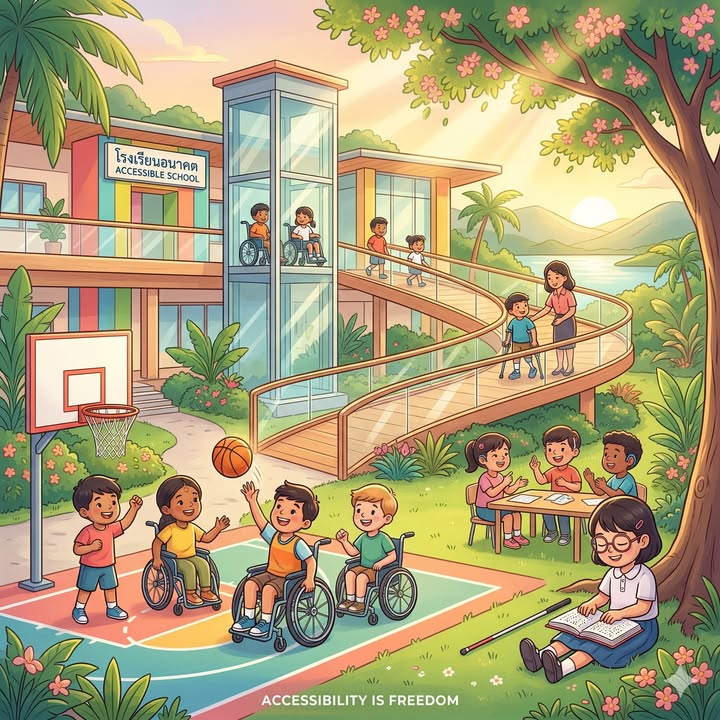
I want to see the day when every school has elevators, complete basic accessibility facilities, sufficient specialized teachers, and every child can reach their dreams regardless of how their bodies may change.
What about your school? Tell me about it 👇👇👇
Source: AccessibilityIsFreedom, UNICEF Thailand