
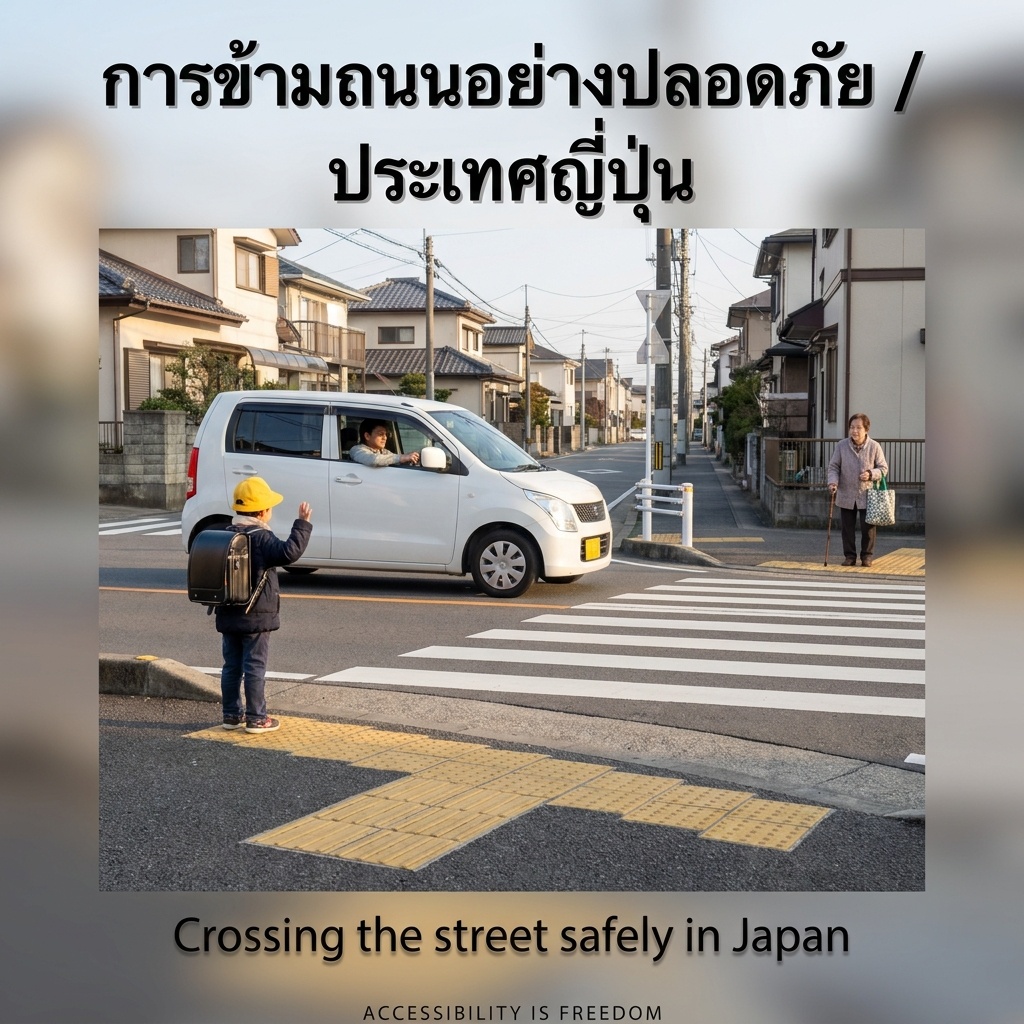
Many of you have probably seen videos of small Japanese children in yellow hats raising their hands before crossing the street, then bowing to thank the driver who stopped. This isn’t just cute — it’s a carefully designed system.
I see Japan building its road safety culture on three pillars: infrastructure, education, and social norms. Not just relying on technology.
Starting from preschool, children are taught to raise their hands (te-o-ageru) so drivers can see them better. The yellow hats boost visibility too. This method has significantly reduced child pedestrian accidents.
For people with visual impairments, Japan has had yellow tactile paving (Tenji blocks) since 1965, and accessible pedestrian signals with bird sounds to help with direction.
The law is strict too. Drivers who don’t stop for people crossing at crosswalks (Ondan-hodo) face heavy fines and license points. This makes drivers take the law seriously.
What’s key is that Japanese people bow after crossing — they see a driver stopping as a kindness, not just an obligation. This creates a culture of mutual respect.
I think we in Thailand can learn a lot from this. Just starting by making crosswalks safe, enforcing the law seriously, and teaching children about safety from a young age would help.
Because road safety isn’t one person’s responsibility — it’s everyone’s.
Sources: Japan road safety culture