
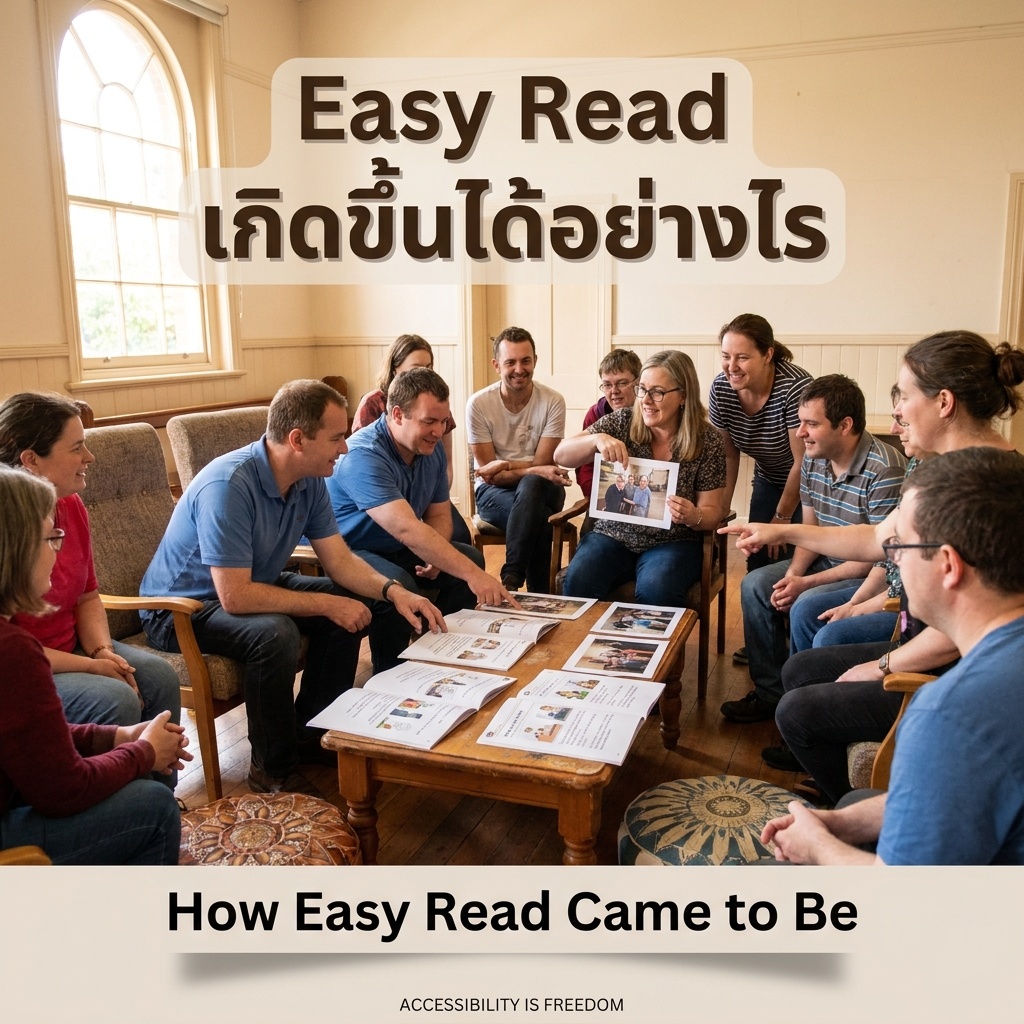
Easy Read benefits everyone. Now we know it a bit — let me share how it came to be.
It wasn’t created by one person. Easy Read grew from a community — people with intellectual disabilities and their allies fighting for the right to access information.
In the 1970s and 80s, People First self-advocacy groups organised under “Nothing About Us Without Us,” demanding information they could access for themselves.
In the 1990s, NHS England’s Karl and Pete noticed people with intellectual disabilities understood photos better than symbols — sparking the use of real photographs in Easy Read.
2001: Valuing People recognised accessible information as a right. 2003: Karl and Pete founded Photosymbols, the first image library with community models. 2006: the UN CRPD declared information access a human right. 2015: the NHS made Easy Read a legal requirement, spreading to Europe, Australia, and South Korea.
January 2026: Photosymbols published the first evidence-based Easy Read standard — developed with over 100 people with intellectual disabilities from 20 organisations.
Easy Read wasn’t built for the community. It was built by the community — and the community still leads it today.
Sources: Photosymbols, UK Government, Wikipedia