
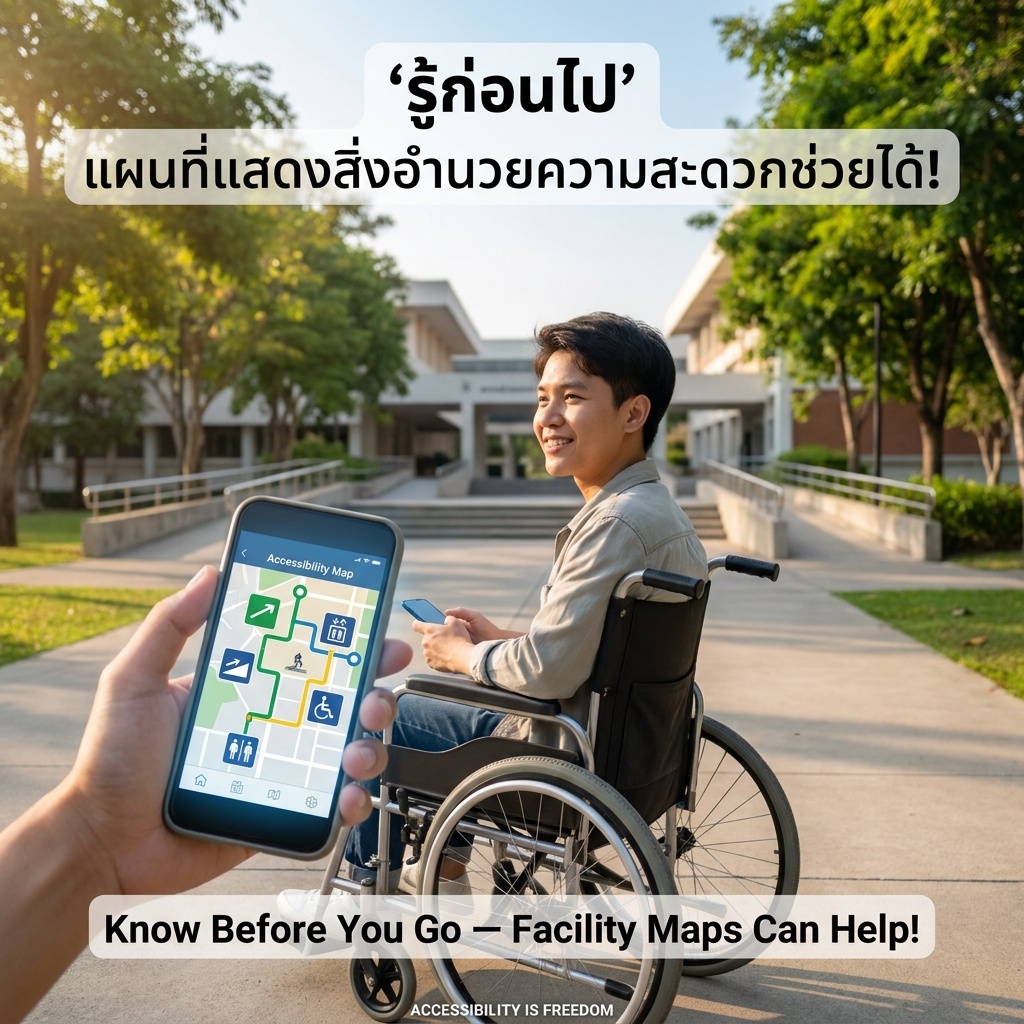
Students have the right to know in advance “which path they can take.” UC Berkeley’s Campus Access Maps already show this — with ramps, restrooms accessible to wheelchair users, and tactile paving. This helps students with accessibility needs plan ahead, no risky trial and error.
But ACM research (2025) — “Accessibility for Whom?” — found that different disability groups perceive barriers differently: wheelchair users may worry about ramps and narrow doors, while those with visual impairments may need information on paths with connected tactile paving. One map does not work for everyone — the information needs to be more detailed.
Even at Columbia University, which provides accessible route information through its Disability Services — students report that barriers occur. Having information doesn’t solve everything. What’s needed is continuous improvement.
Thai universities 🇹🇭 don’t have maps like this — but what Berkeley and Columbia are doing is not far away. Their approach is what should have been there from the start.
Access doesn’t start with a ramp or elevator. It starts with information. “Knowing before you go” is the freedom students with accessibility needs deserve.
Sources: UC Berkeley DAC, ACM, Columbia Spectator