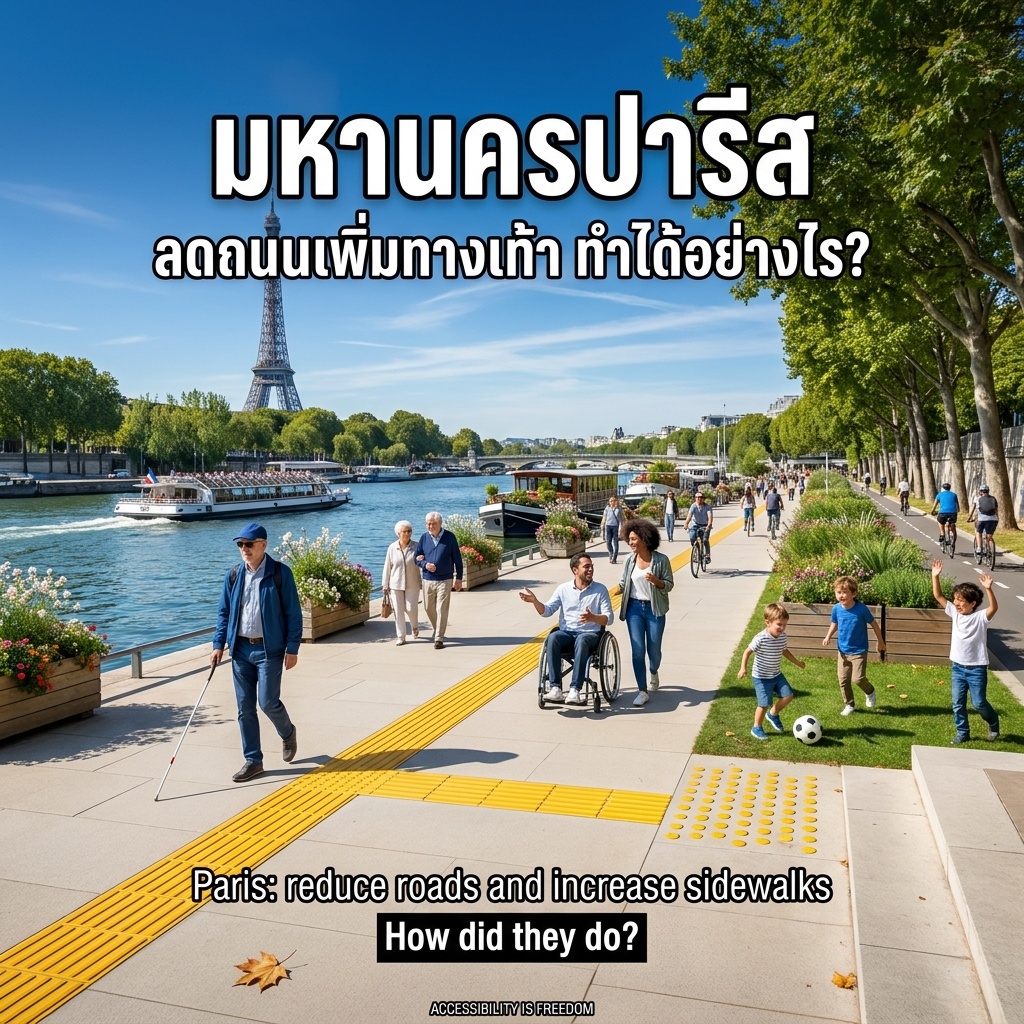
Ten years ago, Paris was ranked among Europe’s most congested and polluted cities. The roads along the Seine River saw 40,000 cars a day. Sidewalks were narrow. Kids were in danger near schools. Sound familiar? This is what we face every day.
In 2014, Mayor Anne Hidalgo announced a city transformation, starting by closing a 3.3-kilometer riverside highway along the Seine and turning it into a public park. Opposition was fierce, but the result was clear — people flooded in, and 40,000 cars a day disappeared from that road.
Then came policy after policy. “Paris Respire” made Sundays car-free in central neighborhoods. They invested 150 million euros (about 5.7 billion baht) to build 1,000 kilometers of bike lanes, turned more than 200 school streets into pedestrian zones, and cut the citywide speed limit to 30 km/h.
The turning point came in 2020. COVID pushed the city to build 50 kilometers of temporary bike lanes — which later became permanent. That same year, Hidalgo won re-election, democracy telling us Parisians approved. Opponents had predicted disaster, but courts threw out their challenges. The numbers spoke — cycling jumped 47% in a single year.
The city kept investing — another 250 million euros (about 9.5 billion baht) for the second cycling plan, aiming to make Paris 100% bikeable. They also launched Grand Paris Express, a 200-kilometer new metro system — the biggest in Europe — worth 35 billion euros (about 1.33 trillion baht).
Here’s the key: all of this happened within one mayor’s 12-year term, not a 100-year project. Paris is an old city, a UNESCO World Heritage site, with a powerful car lobby — no different from ours. But they did it because of political courage, sustained budgets, and visible wins.
So my question is: if Paris — a capital of 2.1 million people — can do this, why can’t we?
Sources: Anne Hidalgo, Cycling in Paris