

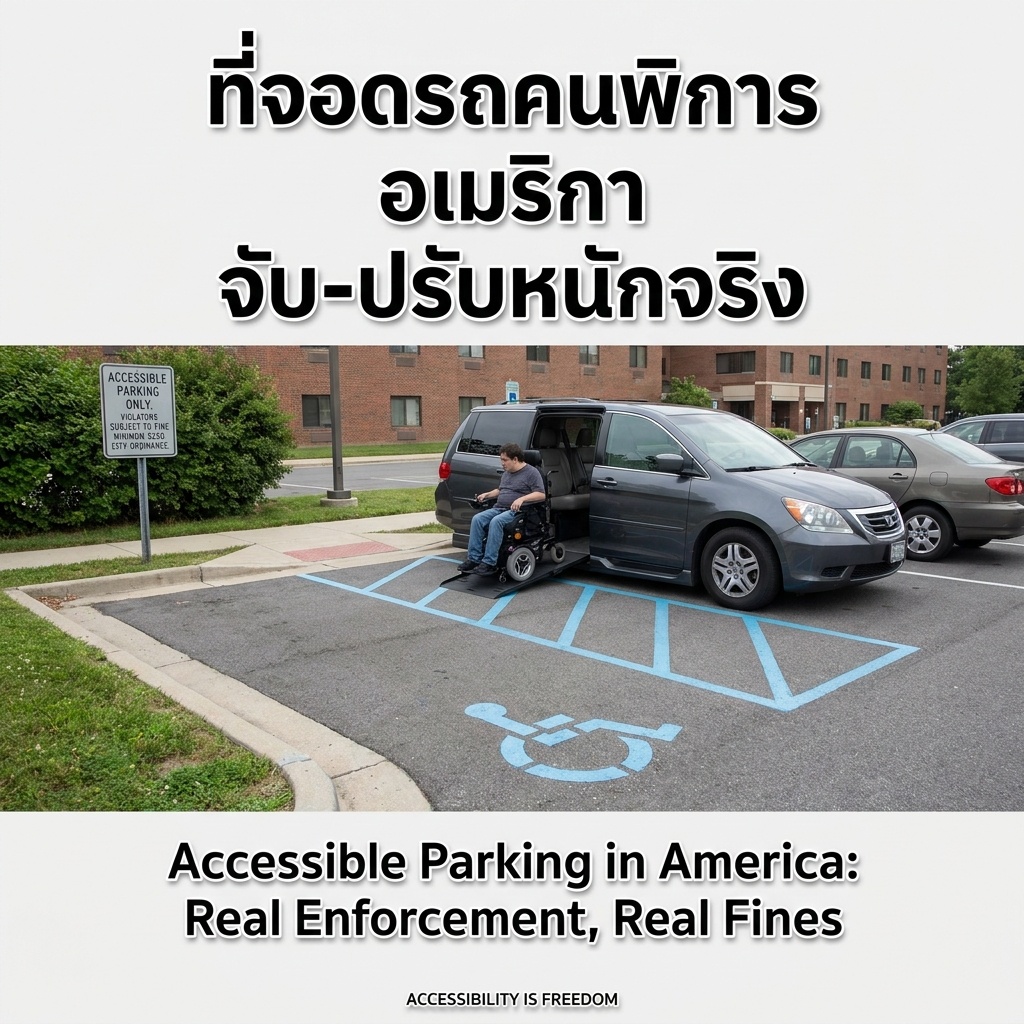
A lot of people ask me how disability parking works in America and why it seems more orderly than back home. Let me break it down.
First, the parking permit system. People with disabilities apply through each state’s DMV. You need a doctor’s note confirming a condition that significantly limits mobility — like respiratory issues, heart disease, or wheelchair use.
ADA standards are strict. One out of every six accessible spots must be wide enough for a van. The disability sign must be mounted 60 inches off the ground. Each spot needs a 5-foot access aisle. If a place doesn’t follow these rules, the first violation can cost up to $75,000 (about 2.5 million baht). Repeat violations can hit $150,000 (around 5 million baht). Plus, they can get sued.
Enforcement is serious. Local police or parking officers patrol regularly. If you get caught, fines range from $100 to $500 (about 3,000 to 17,000 baht) depending on the state. Some states even seize vehicles or make arrests.
What’s interesting is the new tech. Some cities now use IoT sensors to detect violations and alert officers instantly.
The key is awareness. America runs ongoing campaigns in schools and on social media. People learn that disability parking isn’t just about convenience — it’s a necessary right.
Thailand 🇹🇭, our laws are decent but incomplete. Enforcement and awareness still face big challenges. We need to push for stronger laws now.
Sources: ADA.gov, ParkingMD