

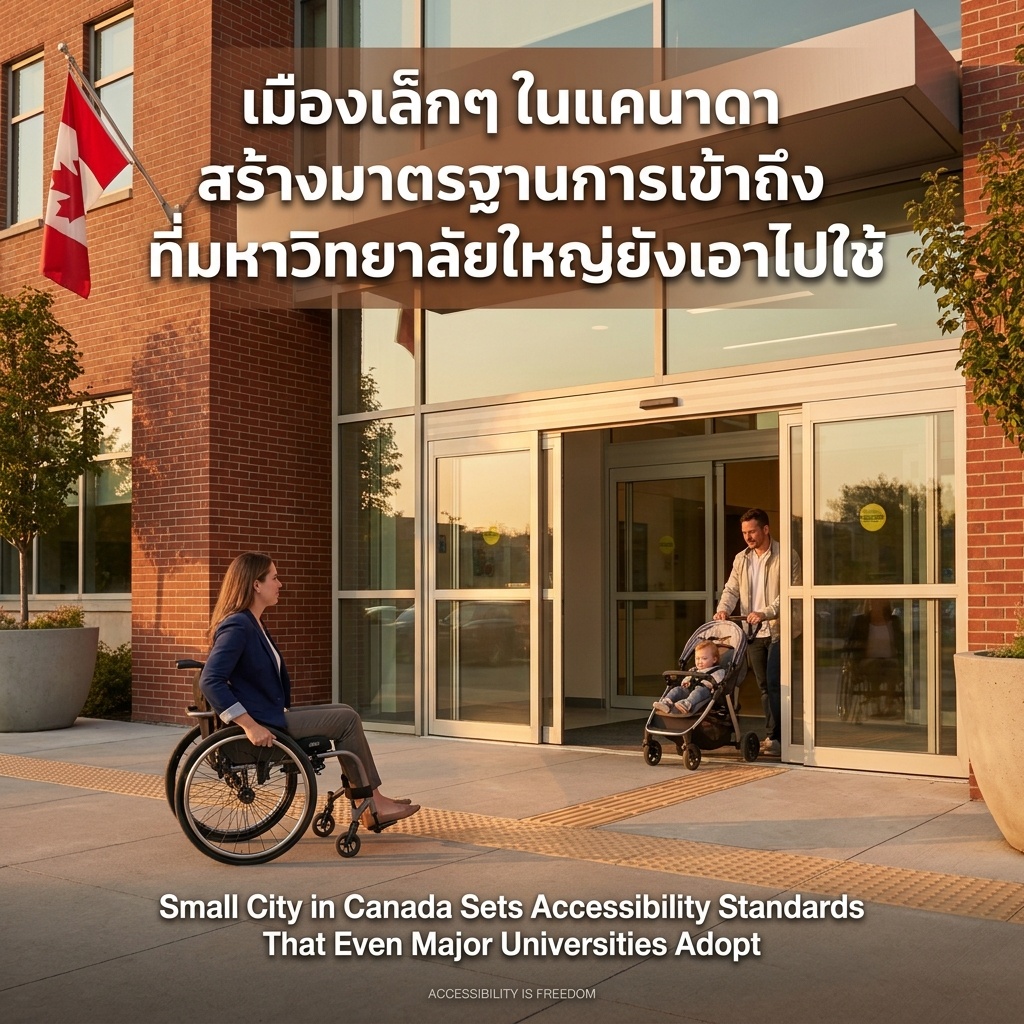
London, Ontario — a mid-sized Canadian city with about 420,000 people. Not the first place you’d think of when it comes to inclusive design. But this city created something that the University of Toronto, one of Canada’s top universities, chose to adopt as its own standard.
It all started with a Facilities Design Guideline — a manual for designing accessible spaces. The city developed it under Ontario’s AODA law, which aims to make the entire province fully accessible by 2025. Its core principles: independence, dignity, integration, and equality of opportunity.
What makes this guideline special? It wasn’t just written to “follow the law.” It was so good that others wanted to use it. The University of Toronto states clearly in its own standards that it received permission from the City of London to use its requirements. And it’s not just Toronto — Sault Ste. Marie and several other Ontario municipalities have adopted this approach too.
This proves that when you design for everyone from the start, your work becomes a model others want to follow. Not just a document sitting on a shelf.
Think about it — does your city have something others want to use yet?
Sources: london.ca + University of Toronto FADS