
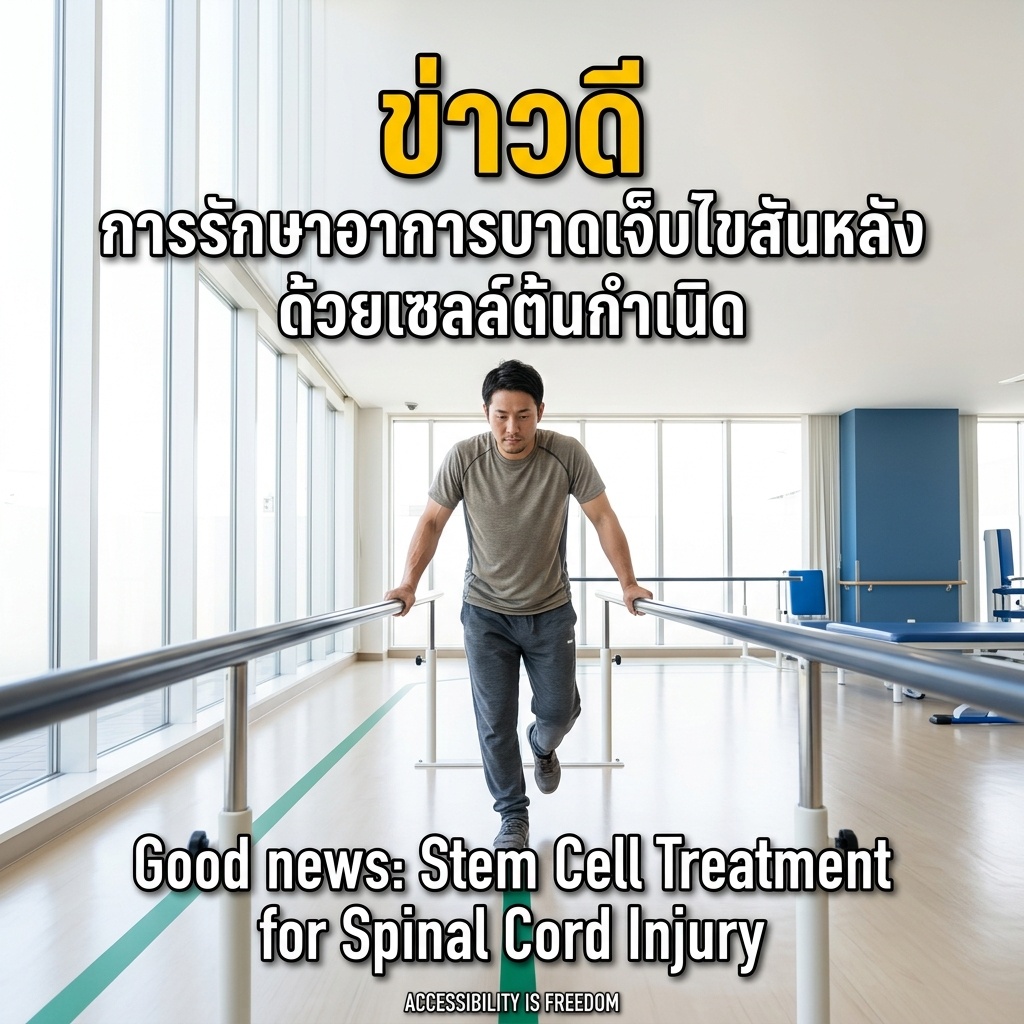
I’ve followed this issue for years, so when the news broke, I dug deeper. This is new hope for spinal cord injury stem cell treatment. A Keio University team in Japan 🇯🇵 published in Nature Medicine (July 21, 2026) — the world’s first transplant of iPSC-derived neural stem cells into an injured spinal cord.
Phase 1 enrolled 4 men, ages 26–66, all with complete cervical spinal cord injury (AIS A). About 2 million cells were injected 15–27 days after injury. Follow-up (2–4 years) found no tumors or serious cell-related side effects. There were 84 adverse events, but only one serious — transient high potassium, judged a blood-sampling error.
On efficacy, 2 of 4 improved from A to C and A to D within 52 weeks. Motor scores rose 13 points (median) vs. 7 historically. One could stand with help — truly exciting progress!
It builds on 2006, when Yamanaka’s Kyoto team discovered how to turn ordinary skin or blood cells into iPS stem cells that can develop into nerve cells — no embryos needed. That won the 2012 Nobel Prize in Medicine, opened the way to growing neural stem cells from body cells, and he himself co-authored this study. Japan’s health ministry approved the trial in 2019; the first surgery came in 2021 (COVID-delayed); results published in 2026, with the next-phase trial planned for 2027.
But let’s stay grounded: 4 people, open-label, no control group — efficacy is preliminary, not an approved treatment. Larger trials must come first. It may reach the market in the first half of the 2030s. Over 15 million people live with spinal cord injury; Japan sees about 6,000 new cases yearly. An important first step, but a long road remains.
Sources: Nature Medicine 2026, Asahi, WHO