
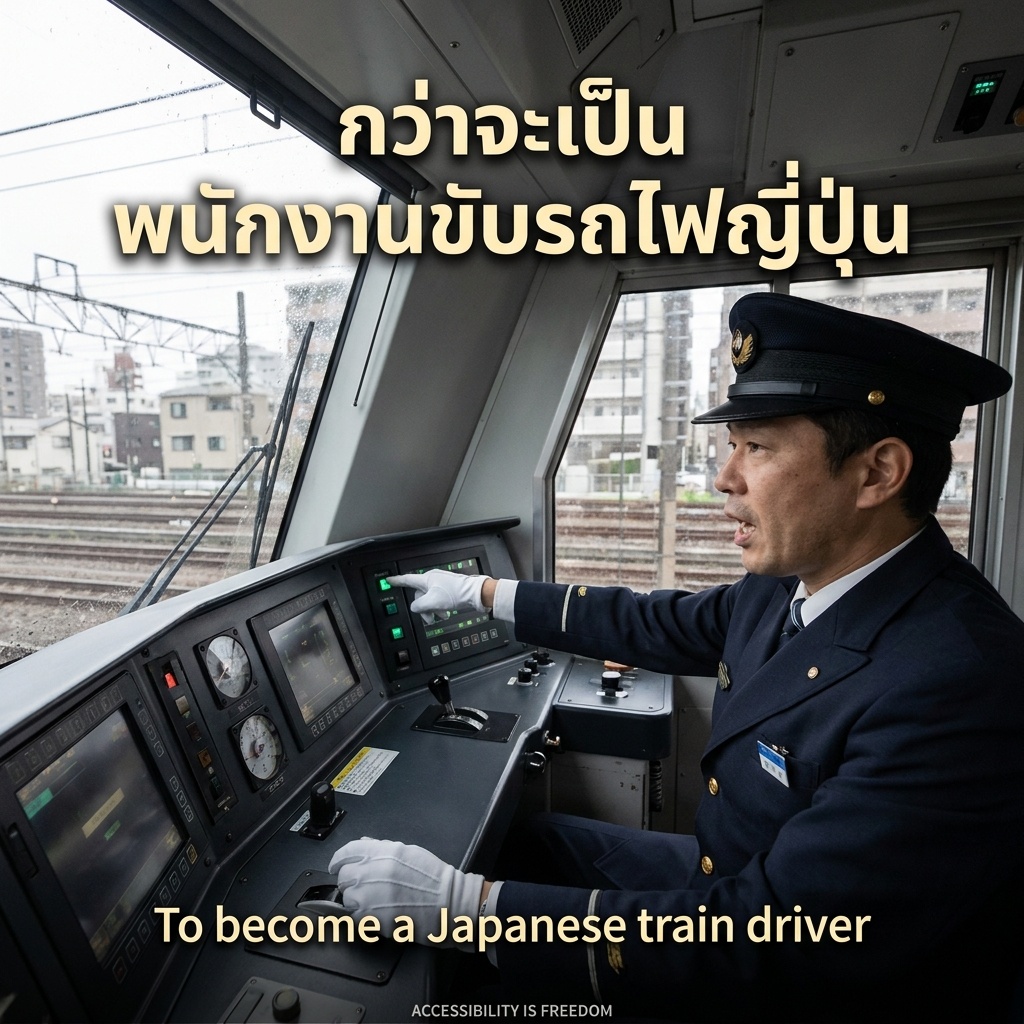
Start with a picture of a Japanese train driver in the cab — pointing at every signal, calling out every speed, every sign loudly. This is “shisa kanko,” the point-and-call technique studied by Japan’s RTRI. Research found it reduces human error by up to 85%.
But shisa kanko is just the end result. Getting there takes over 10 years: 2 years as a station worker → 2 years as a train controller → several years driving regular trains → passing a national license exam → finally driving the Shinkansen. Every step uses simulators, on-the-job training, and strict exams. No shortcuts.
When mistakes happen — the system doesn’t punish, it learns. After the 2005 Amagasaki crash (107 deaths), partly caused by a driver afraid of punishment who hid errors, JR West and 6 other major railway companies changed policy: no punishment for honest mistakes. The result? Error reporting went up significantly.
The outcome of this whole system: over 60 years, zero passenger deaths on the Shinkansen — from more than 9.2 billion passengers.
Thailand is building its own railway safety — from drug testing drivers, receiving KIHA trains from JR East, to training programs with JICA. This isn’t about comparing who’s better. It’s about showing that “safety doesn’t come from luck — it can be built.” With a system designed to help people do their best work.
Sources: NHK, Nippon.com, JR West