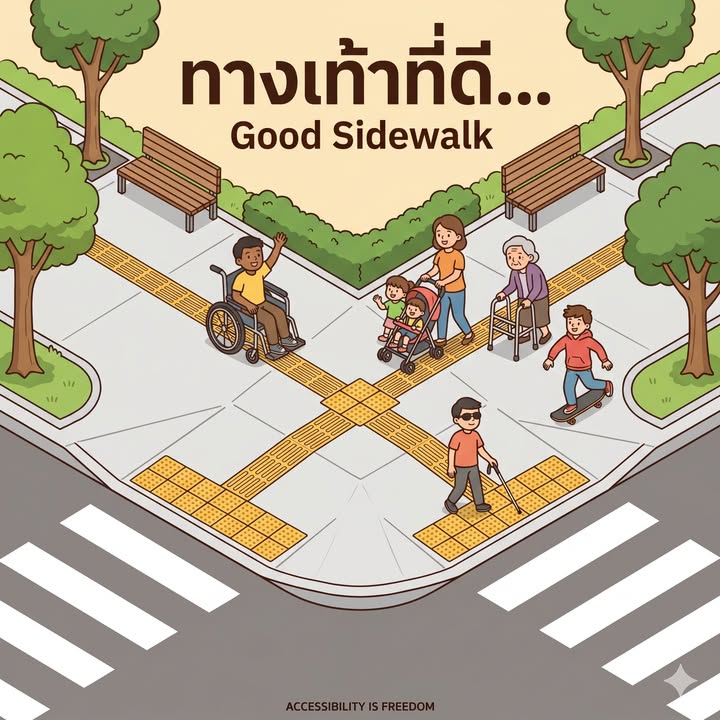
Ramps help wheelchair users get onto sidewalks. But wait — they also help parents pushing strollers. And delivery workers hauling carts. And honestly, everyone else finds them easier to walk on too. That’s the ‘Curb Cut Effect’ — designed for the most vulnerable, but benefiting everyone.
1.3 billion people worldwide (16% of the global population) have disabilities. Without accessible sidewalks, they face travel difficulties more than 15 times greater than others.
Good sidewalks follow international standards: at least 90cm wide (ideally double that, so people can pass each other), smooth continuous surfaces that aren’t slippery, and ‘tactile paving’ to help blind pedestrians navigate safely.
And for Thailand 🇹🇭, we need to add one more thing — no illegal sidewalk vendors blocking the way! 😜
Good sidewalks mean everyone can travel conveniently and safely. This directly impacts urban quality of life — it’s a key to sustainable city development.
Bangkok, Thailand’s capital, still faces sidewalk obstacles everywhere. But over the past decade, we’ve seen positive changes. Better is absolutely possible, if we all work together…
What kind of sidewalks do you want? Tell me your thoughts!
Stay tuned for Part 2: Tomorrow