
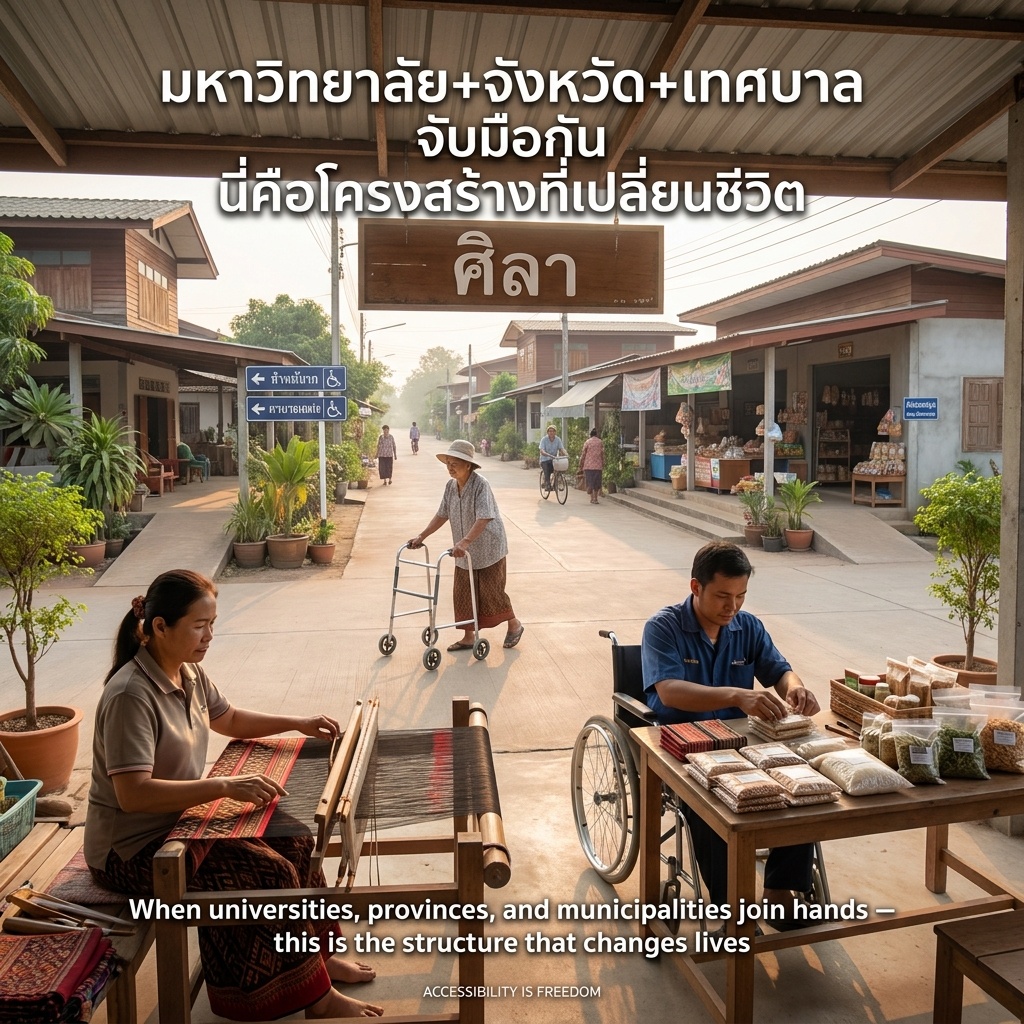
On May 26, 2026, something happened in Khon Kaen that was more than just good news — it was a blueprint for systemic change. Khon Kaen University (KKU), through its Office of Academic Service, partnered with the Khon Kaen Provincial Employment Office and Sila Municipality to formally register groups of people with disabilities in Sila as “Home-based Worker Groups.”
This isn’t about a university doing a one-time good deed. It’s about three institutions working together to create a legal pathway for people who were outside the system. When a group of people with disabilities has official employment status, they gain access to protections, benefits, and economic participation that informal workers never had.
Importantly, this work is part of an ongoing collaboration between KKU and King Mongkut’s University of Technology Thonburi (KMUTT) under the “Vocational Development for People with Disabilities Project.” This shows that vocational development for people with disabilities isn’t a temporary project — it’s serious, sustained academic work.
This is the direction we should watch — when systems work together, access is no longer just a dream.
Note from Saba: Besides home-based work, which is a good starting point, we must also support and encourage people with disabilities who have potential to work in the community like everyone else — to create a truly equal society as much as possible.
Sources: Khon Kaen University