
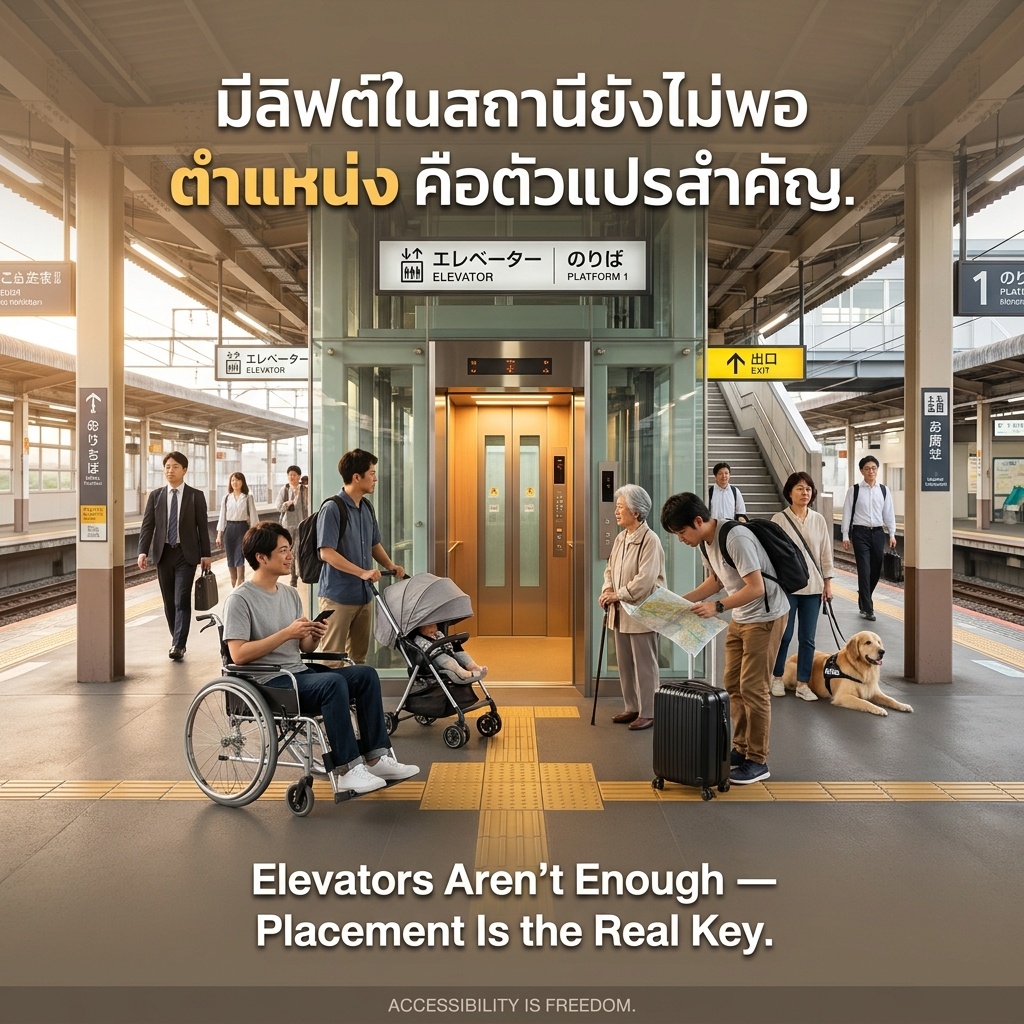
Imagine rushing for a train, only to find the elevator at the farthest end of the platform — an extra minute and a half just to reach it. For wheelchair users, this isn’t hypothetical. Japanese researchers recently measured it in real numbers.
A 2025/2026 study on ScienceDirect analyzed walking time in Japanese train stations, calculating actual travel distance — not just “has an elevator or not.” It found wheelchair users spend 2.4 times longer on platforms than pedestrians.
The point: accessibility doesn’t end with having an elevator. It’s about where you put it.
Well-placed elevators narrow this gap — and all passengers benefit, from parents with strollers to tourists with luggage to elderly travelers.
Thailand 🇹🇭 has long pushed for accessible transit. Beyond placement, having enough elevators is just as critical.
“Such a long walk” — even able-bodied people say it. Credit to agencies that listened and added more elevators.
What Japan is doing is redefining “accessible” — measuring real outcomes and designing continuously. Because equality never stops at “good enough.”
Sources: ScienceDirect, Accessibility Is Freedom