

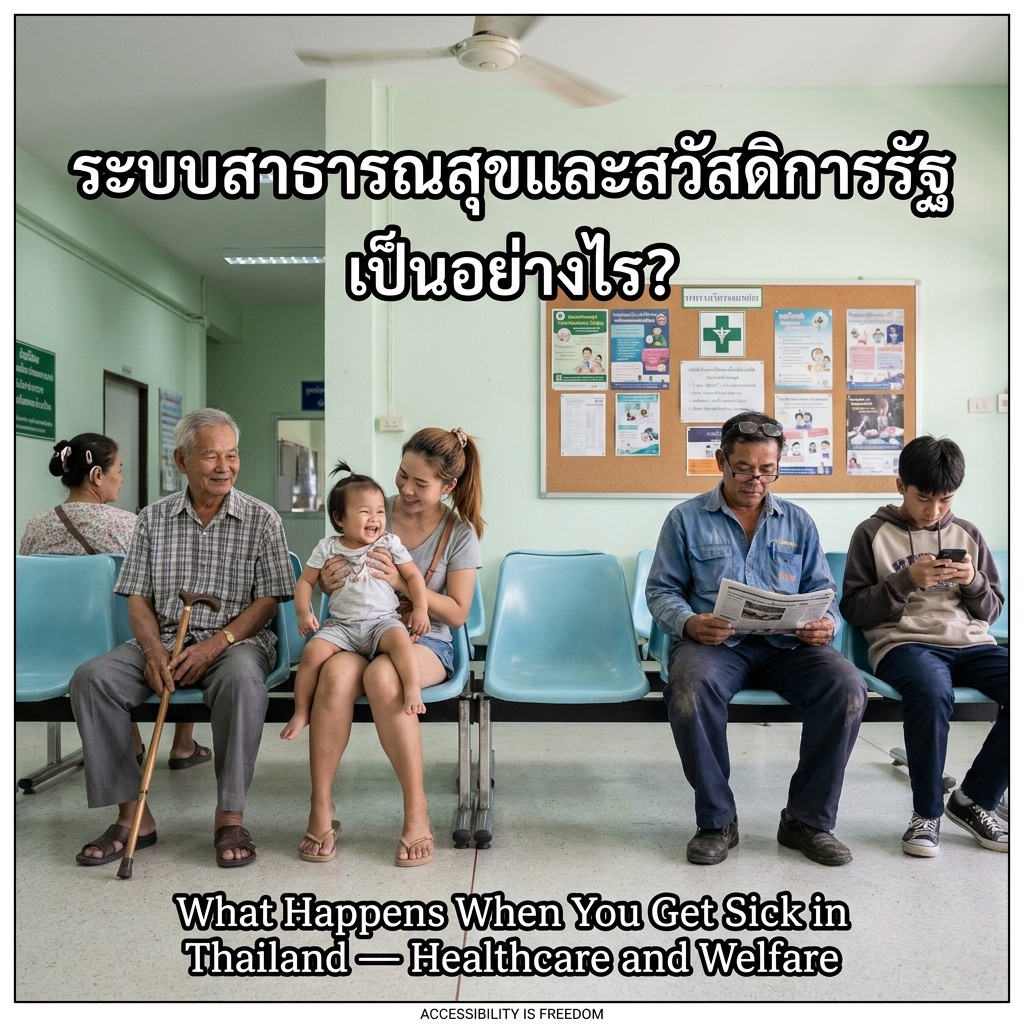
“How good is Thailand’s public health system?” — I’ve heard that line a lot, but I never really looked into it. So today, let’s dig in.
It starts with the law. The 2007 Constitution, Section 51, guarantees equal rights to standard healthcare services. The National Health Security Act of 2002 created the Universal Coverage Scheme (UCS), also known as the “30-baht treat-all” gold card. Now, 47 million Thais — 76% of the population — are in the UCS, with 14% in Social Security and 10% under civil servant benefits. Together, nearly everyone.
On budget — in 2024, the NHSO fund received a record 265,295 million baht, about 4,100 baht per person per year, or 3.8% of GDP (2019 data). Cost-effective for the coverage.
So what happens when I actually get sick? Let’s say I have a fever — I go to my registered primary care unit or district hospital. Just show my national ID card — no separate gold card needed. If it’s serious, I get referred to a provincial or university hospital with no extra cost. And the “30-baht treat anywhere” policy expanded to all 77 provinces as of January 2025, so patients can access care anywhere without cost worries.
This system has nearly doubled cancer treatment access and helped Thais stop fearing they’ll go broke when they fall ill. From law to budget to the actual treatment path.
There are still big challenges — long wait times and uneven distribution of medical staff. But the system we have now — from the Constitution to just one ID card — is something to be proud of.
What’s it like in your country? Share below👇
Sources: WHO, NHSO, Thai PBS, Hfocus, Bangkok Post, Bangkok Biz News