
EP 1: https://www.facebook.com/AccessibilityIsFreedom/posts/1397095355794574
Quiet Spaces: What International Standards Exist (Part 2)
When we step outside, cities hit us with relentless stimulation — sweltering heat, traffic jams, dust, smoke, endless rushing. Work piles up. Our bodies and minds grow weary. What if we had a place to pause, recharge, and continue? We call these quiet spaces.
Following Part 1’s look at Italy and Japan, let’s dive deeper into international standards.
🇯🇵 Japan — Where Quiet Spaces Began:
Japan launched sensory rooms at Haneda Airport in December 2020, becoming the nation’s first airport with dedicated spaces. Narita Airport followed, creating rooms for people with developmental, intellectual, and psychosocial needs traveling with families — available in both domestic and international terminals.
These rooms feature dim lighting, absolute silence, and stress-reducing environments for people with autism and those sensitive to sound, light, or eye contact. They help prevent overstimulation and panic. Each also includes a lockable first-aid room. To access, travelers call the number posted at the door, and staff arrive promptly to assist.
🇸🇬 Singapore — Raising the Regional Standard:
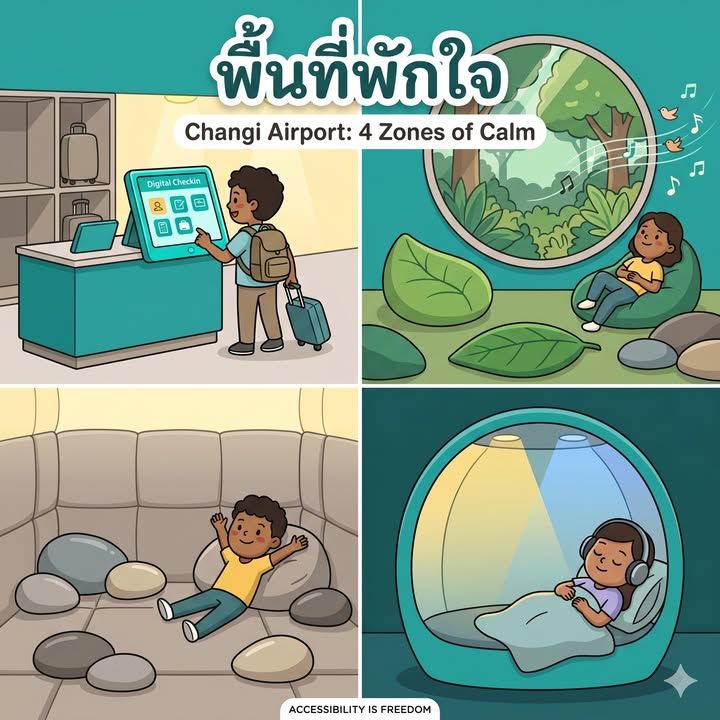
Changi Airport unveiled its “Calm Room” on October 16, 2025, at Terminal 2, post-immigration. This 200+ square meter sanctuary uses teal, soft yellow, and warm grey tones to create tranquility. Designed with AWWA and Metta Welfare Association — incorporating input from mental health experts and families — it features four specialized zones:
• Welcome Area — A transition space from airport chaos with eye-soothing colors, soft lighting, luggage storage, and automated assistance screens
• The Forest — The largest zone, using biophilic design with circular windows projecting Singapore nature, bird songs, and varied seating for personalized comfort
• The Den — For those who regulate through movement, featuring padded walls, stone-shaped pillows for play and relaxation, stimulating proprioception
• The Nest — Two private soundproof rooms with adjustable colored lighting, offering maximum privacy for those needing complete solitude
🇬🇧 UK & 🇦🇺 Australia — Quiet Hour Programs:
Major retailers like ASDA (630+ stores), Tesco in the UK, and Coles and Woolworths in Australia run “Quiet Hour” programs — temporarily reducing stimuli by dimming lights and silencing announcements at scheduled times, rather than building permanent spaces.
💬 Our community speaks: Everyone wants to see quiet spaces here in Thailand too 🇹🇭
📌 Coming up in Part 3 — stay tuned and please share this series!!!
Source: Japan Airport Terminal (2020), Changi Airport Group (2025), AWWA Ltd., Metta Welfare Association, ASDA Quiet Hour, Coles Quiet Hour