

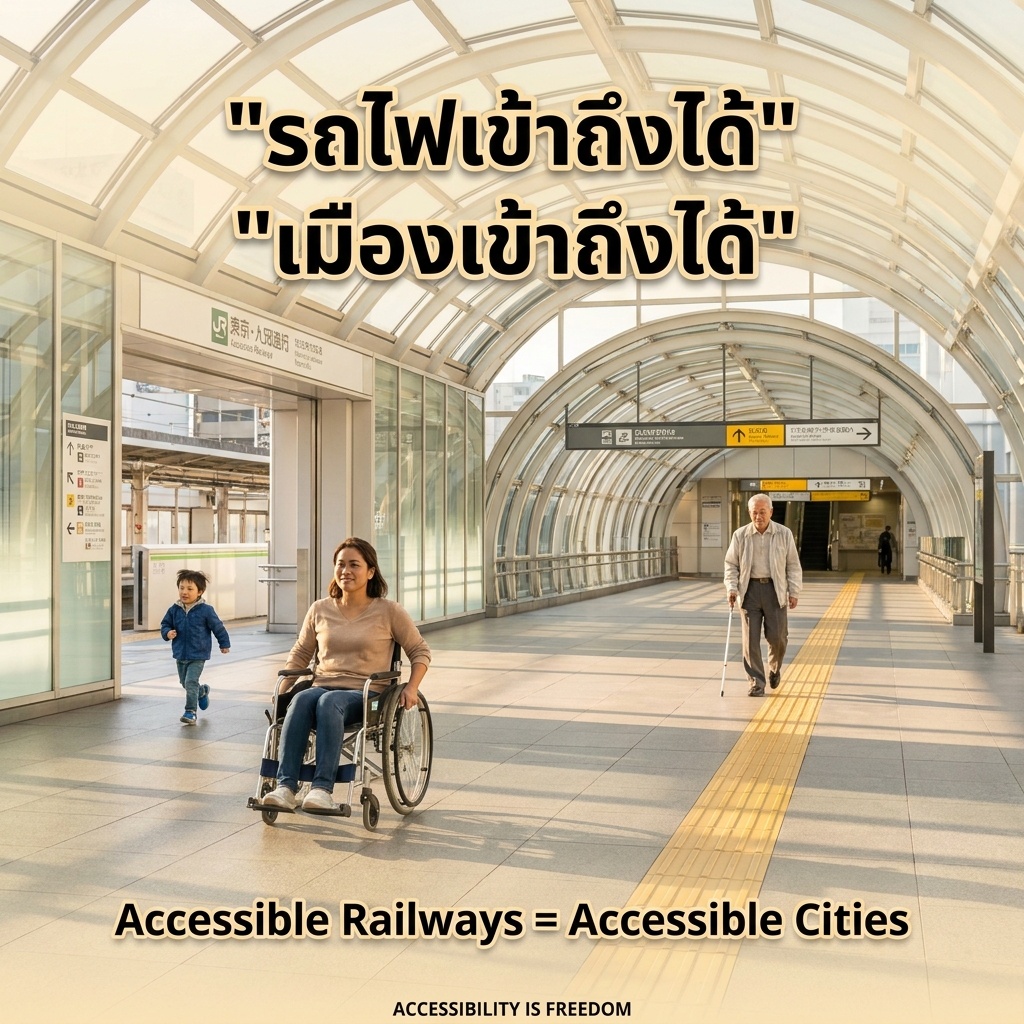
Think about it: if your city’s train stations still have only stairs—no elevators, no ramps for wheelchair users, and signs that are hard to read—can that city really call itself a city for everyone? Japan 🇯🇵 is leading the way by seriously applying Universal Design to its rail system. From tactile paving for people who are blind, wide doors for wheelchairs, reachable button heights for all, to dedicated wheelchair spaces on trains—everything is built into the system from the start. Not an afterthought.
And Japan isn’t alone. The United Kingdom 🇬🇧 published its Accessible Railways Roadmap, which clearly defines seven key areas: improving stations and trains, making passenger assistance reliable, providing accessible customer information, and changing the culture of the entire railway industry. Each area has a lead organization responsible for reporting progress regularly.
What Japan and the UK are doing proves that an accessible rail system isn’t a distant dream. It’s real. And it’s measurable. Because when railways work for everyone, the whole city works for everyone. Inclusive design from the start isn’t a burden—it’s the foundation of an equal society and safe, dignified travel for all people with disabilities.
Sources: Japan Railway Technical Review, UK Accessible Railways Roadmap