
Ever walked into a building and found only stairs — no ramp, no elevator — then had to turn back? This isn’t just inconvenience. It’s design that excludes people.
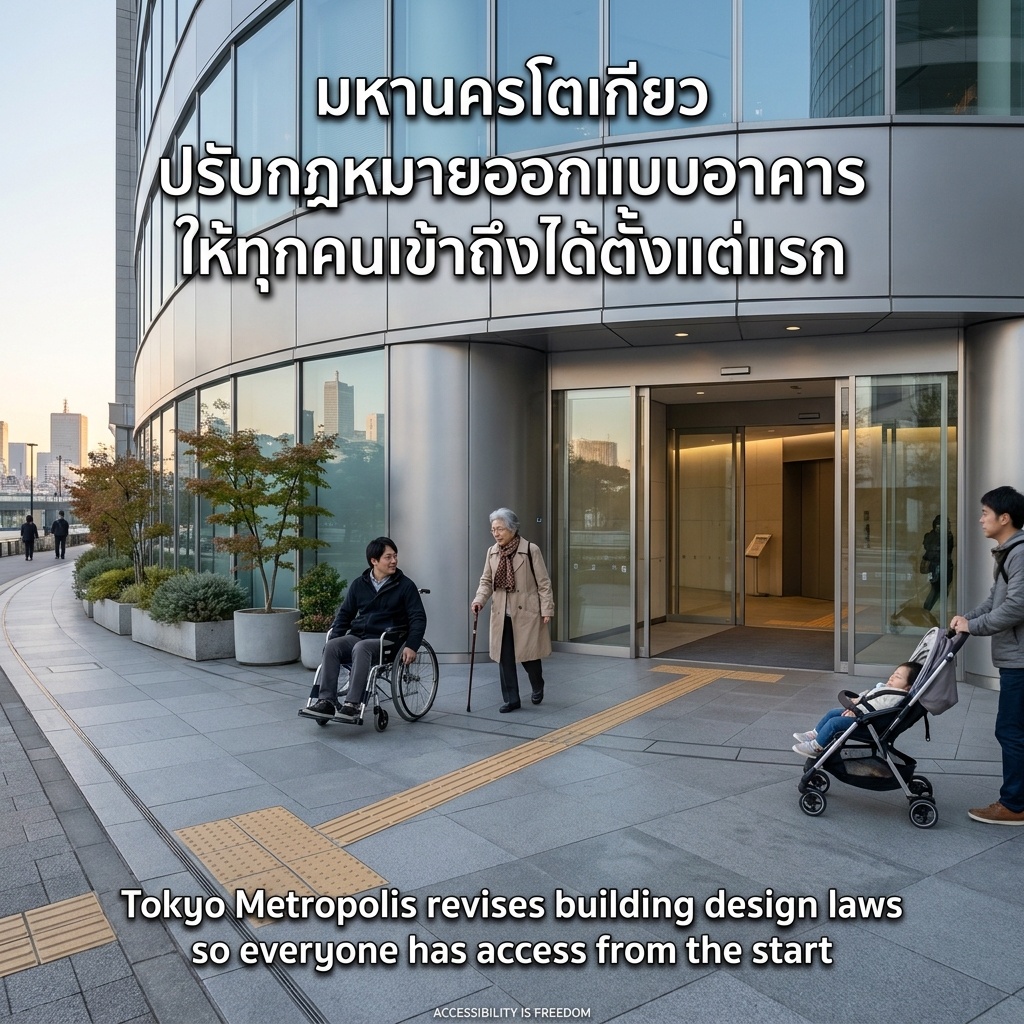
In Tokyo, the Bureau of Urban Development sets citywide building standards — and one requirement is accessible design from the blueprint stage, not retrofitted later.
This is “Human-Friendly City Development” (人にやさしいまちづくり) — designing so wheelchair users, older adults, parents with strollers, and travelers with luggage can use the same space equally. Tokyo publishes these regulations in English — open for the world to study.
No system is perfect. The Meiji Jingu Gaien controversy, where a person with a disability refused relocation, shows the gap between policy and lived experience.
Thailand has laws on accessible buildings. But does our responsible agency have a framework this clear? Is Bangkok ready for development that truly puts people first?
Sources: Tokyo Metropolitan Government + Cambridge University Press